

The circular economy works – Interzero and Fraunhofer UMSICHT demonstrate tangible results
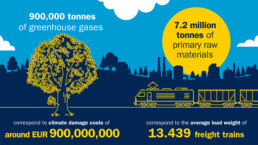
Recycling brings tangible benefits for the climate, helps to conserve valuable natural resources and reduces the economy’s dependence on primary raw materials. The latest study, „resources SAVED by recycling”, carried out by Fraunhofer UMSICHT, illustrates the scale of this impact. In 2025, Interzero’s recycling activities saved over 7.2 million tonnes of primary raw materials and avoid emissions in excess of 900,000 tonnes of greenhouse gases.
Recycling as a practical way to support climate protection
The growing demand for raw materials, climate change and pressure on global supply chains mean that the effective use of recycled materials is becoming increasingly important.
One solution is recycling, which allows materials already in circulation to be reused rather than relying on further virgin raw materials. Its actual impact has been analysed jointly for many years by Interzero and the Fraunhofer Institute for Environmental, Safety and Energy Technology UMSICHT.
The latest figures show that in 2025, Interzero kept approximately 2 million tonnes of recyclable materials in Germany, Austria, Poland, Italy and Slovenia. This has resulted in savings of over 7.2 million tonnes of primary raw materials. To give an idea of the scale – this is equivalent to the average load carried by approximately 13,439 freight trains.
Over 900,000 tonnes of emissions avoided
The benefits of recycling extend beyond the consumption of raw materials. Compared with production based on virgin materials, Interzero’s activities will have prevented emissions of over 900,000 tonnes of greenhouse gases.
This also translates into tangible economic value. Taking the interests of present and future generations equally into account, reducing emissions corresponds to approximately €900 million in avoided costs relating to the effects of climate change.
The data show that the circular economy is not merely a component of environmental policy. The appropriate use of secondary raw materials can also support economic resilience, reduce the demand for imported resources and lessen the vulnerability of businesses to disruptions in global supply chains.
Recycling plastics helps to save oil
This year’s edition of the study also highlights, for the first time, the impact of plastics recycling on crude oil consumption.
According to calculations by Fraunhofer UMSICHT, keeping approximately 1 million tonnes of plastics in 2025, this resulted in savings of around 3 million barrels of crude oil. This is roughly equivalent to 9.5 million 50-litre containers.
The calculations are based on a comparison of the energy requirements for the production of new plastics and for recycling processes. This demonstrates how replacing virgin raw materials with recycled materials translates into actual resource savings.
As he emphasises Jan Kroker, CEO of Interzero, recycling enables waste to be transformed back into valuable raw materials for industry. In this way, it contributes both to climate and resource protection and to reducing Europe’s dependence on imported raw materials.
Data illustrating the real-world impact of the circular economy
Reliable data is one of the key elements of the transition to a circular economy. It enables businesses not only to measure the environmental benefits of recycling, but also to make more informed decisions regarding the use of materials, packaging design and waste management.
The Fraunhofer UMSICHT study on Interzero’s activities is being carried out in accordance with international life-cycle assessment standards ISO 14040 and ISO 14044 and includes activities relating to recycling.
The results for 2025 illustrate the scale of the impact:
- over 7.2 million tonnes primary raw materials saved,
- around 2 million tonnes materials kept in circulation,
- over 900,000 tonnes greenhouse gas emissions avoided,
- around 3 million barrels of crude oil saved through the recycling of plastics.
These concrete figures show that closing material cycles can simultaneously support climate protection, conserve resources and strengthen the European economy’s security of supply of raw materials.
Leaflet for the study "resources SAVED by recycling" 2025
Contact

biuro@interzero.pl