
Waste services for electronics and home appliance manufacturers
Electronics and home appliance manufacturing generates diverse waste streams, and managing them requires resources at many stages of a company’s operations. Discover Interzero’s services already proven in practice – from comprehensive waste management outsourcing to the treatment of defective products and demanding WEEE streams.
Beyond WEEE – waste management for consumer electronics and home appliance companies
Waste management for consumer electronics utilityand home appliance manufacturers goes far beyond used equipment and batteries.Companies in this sector face a range of operational, environmental and regulatory challenges at the same time:
the management of various types of post-production waste, which require different conditions for storage, transport and disposal
the safe destruction and recycling of products and components that are unfit for sale, have been withdrawn from the market, or originate from repairs and consumer complaints
responsibility for waste generated at various stages of a product’s life cycle – from production and quality control through to the end-of-life stage
growing pressure to introduce solutions in line with the principles of the circular economy
organising the collection of waste electrical and electronic equipment and batteries from private individuals
the need to store and manage hazardous waste
the fulfilment of numerous EPR obligations in the markets of EU Member States (packaging, electrical and electronic equipment, batteries),
Proven treatment methods for WEEE and other waste from electronics and home appliance manufacturing
Thanks to our in-depth knowledge of the specific nature of the consumer electronics, household appliances and consumer electronics sector, as well as its greatest waste management challenges, we have developed unique processes that enable the optimisation of selected aspects or the entire waste management process. We offer these to manufacturing companies in this sector in the form of ready-made implementation models involving the outsourcing of some or all tasks related to waste management from plants, warehouses and other facilities. Each model is based on solutions that have already been tried and tested in real-world conditions and relieves the client of tasks requiring specialist knowledge, appropriate technological infrastructure or the commitment of significant internal resources. Interzero is responsible for adapting and implementing the chosen model, and subsequently supervises and coordinates its day-to-day operation.
Ready-made waste management models enable the quick and hassle-free implementation, within a single plant or across the entire company, of solutions that our experts have designed and developed over many years. Rather than committing the client’s time and resources to designing processes from scratch, we use a tried-and-tested framework and adapt it to the scale of the business, the plant’s work organisation and the manufacturer’s specific requirements. This shortens the path from identifying a need to launching the service and reduces the risks associated with implementing an untested process.
The range of ready-made waste management services for manufacturers of audio-visual equipment, household appliances and consumer electronics includes, amongst other things, comprehensive outsourcing of waste management for production facilities – including staff to manage waste collection areas, the organisation of collections and the processing of all waste fractions – as well as the handling of faulty and end-of-life equipment. In the latter case, the turnkey process may include the collection of products, the selection of a suitable facility, supervised destruction, the secure erasure of data from digital media, and the provision of documentation confirming the correct disposal of the equipment.
Comprehensive outsourcing of waste management from production facilities
For manufacturers of electronics, audio/video equipment and domestic appliances, we have developed a ready-made waste management outsourcing model that enables clients to hand over to Interzero all tasks relating to waste management at their site or sites. This a well-developed and field-tested operating procedure, which combines the three key elements of the plant’s waste management system into a single, efficient process:
- staff – We deploy experienced, suitably trained staff to the client’s premises, who take charge of the day-to-day management of waste areas: waste sorting and storage, preparing waste for transport, coordinating collections and organising the waste area,
- logistics – we organise the collection of all waste fractions we handle that are generated at the client’s premises, including packaging waste, defective products, production scrap and process waste,
- development – We ensure that waste is delivered to specialised facilities, which process it in accordance with the applicable regulations and in line with the waste management hierarchy.
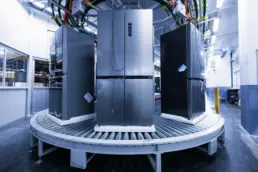
Thanks to our extensive network of recipients and partner facilities, we can ensure the continuity of collections for the most common waste streams, expand our services to include further waste fractions, and provide one-off waste management services for non-standard waste and products. The manufacturer thus benefits from a consistent waste management model delivered by a single operator, which relieves pressure on the company’s internal resources and minimises the risk of disruption to plant operations.
Collection of more than 7,000 tonnes of waste per year – an Interzero’s client client case study
The initial problem:
A manufacturer of household appliances wished to free up the company’s internal resources and outsource the management of waste generated at five sites (both production and non-production) to an external operator. This service was to include the outsourcing of waste management staff, the organisation and coordination of waste collection, and the transfer of waste for disposal. The manufacturer required waste to be processed in the most sustainable and compliant manner possible, whilst prioritising recycling.
Our solution:
We have implemented a comprehensive waste management service for all the client’s premises and have assigned our staff to carry out day-to-day tasks and manage the waste collection areas. By utilising our extensive network of collection points and processing facilities, we have ensured the continuous collection of all waste fractions, including defective and unsaleable products. The cooperation is based on a framework agreement drawn up in accordance with the manufacturer’s needs and covering the types of waste generated at each location. Where necessary, we also provide services beyond the scope of the agreement (e.g. the management of new types of waste), which we price individually based on current market rates.
Result:
The manufacturer outsourced its entire waste management operation to a single operator – Interzero. This has simplified its dealings with the service provider, reduced the number of time-consuming tasks and relieved plant staff of the burden of carrying out waste-related duties. It has also ensured operational continuity and minimised the risk of downtime caused by overflowing waste storage areas. In 2025 alone, over 7,000 tonnes of waste were sent for treatment under this model.
The benefits of working with Interzero

- One operator for all waste
Simpler communication and invoicing with the service provider, a clear division of tasks and responsibilities - Outsourcing of waste management services
Outsourcing of tasks relating to sorting, warehousing and the coordination of collections to qualified external staff - Ensuring business continuity
Reducing the risk of waste storage areas becoming overfilled and the associated disruptions to plant operations - Disposal of equipment unfit for sale
Professional destruction and processing of products, ensuring a high level of raw material recovery - Flexible collaboration
The ability to efficiently commission ad hoc services without having to find a new waste collector each time - Sustainable waste management
Priority should be given to preparing materials for reuse, recycling and other methods that maximise the recovery of raw materials
Managing defective products – professional treatment of electronic equipment
We have developed a turnkey service for the collection and management of equipment that is unsuitable for sale or has been withdrawn from the market. As part of a single process We coordinate logistics, select the appropriate processing method and facility, organise the destruction of products in accordance with the client’s requirements, and provide full documentation of their disposal. Where necessary, we extend the process to include the supervised destruction or secure erasure of data stored on digital media. The service can cover both a single site and a dispersed network of warehouses, service centres or other facilities throughout the country.
From our customers We collect all products intended for disposal, including damaged, faulty or incomplete equipment, products resulting from consumer complaints and returns, non-functional electronic components, and devices that have failed quality control.
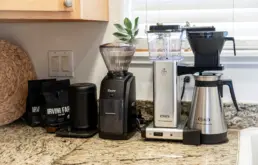
Different types of equipment require different processing technologies, which is why when providing the service We work with a number of reputable recycling companies, which specialise in the processing of specific categories of equipment. When preparing a quotation, we select the most suitable processing technology and identify the facility that will best handle the entire batch of products intended for destruction. This enables us to immediately direct the equipment collected from businesses to the appropriate process and facility, which meets all the manufacturer’s requirements and ensures the highest level of raw material recovery.
One waste operator nationwide – Interzero’s client client case study
The initial problem:
A manufacturer of small domestic appliances and consumer electronics was seeking an operator to comprehensively manage the collection and disposal of products intended for recycling. Collections were to be carried out on demand and would include new equipment that originated from defective batches, had failed quality control, had been damaged in transit, and so on. For some orders, it was also necessary to organise a supervised product destruction procedure, guarantee the erasure of data stored on digital media, or provide detailed confirmation of destruction.
Our solution:
We have implemented a flexible service model based on individual pricing for each order. Thanks to an extensive network of trusted recycling partners, we have ensured that the manufacturer can have all electrical and electronic products collected and disposed of, regardless of their weight or type. As part of our service, we also organise the supervised destruction of products and the erasure of data from hard drives. Once the order has been completed, we provide the client with confirmation that the equipment has been disposed of correctly.
Result:
The manufacturer has secured a permanent operator to handle irregular and varied orders for the disposal of defective products. By establishing a partnership with a single, versatile coordinator – Interzero – the manufacturer has also managed to standardise the processes for the collection of WEEE from all its offices and warehouses, and to streamline the flow of information between staff and the waste collection company.
The benefits of working with Interzero
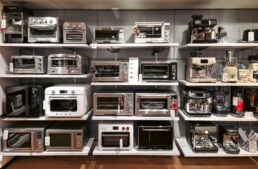
- Collection of all faulty products
A single operator coordinates the entire process of collecting, destroying and recycling the equipment - Professional management of equipment
The selection of a specialised plant and an appropriate, sustainable processing method - Secure data erasure
Of all digital storage media (including HDDs, SSDs and USB sticks) - Organisation of destruction under supervision
Execution of the order in accordance with formal and legal requirements and the client’s expectations - Full documentation of the process
Confirmation of the destruction of products and the proper disposal of the resulting waste - Simpler reporting
Weights and quantities of waste and faulty equipment handed over for management
Other environmental services for electronics and home appliance manufacturers
We can supplement our existing service models with additional services tailored to the needs of electronics, audio-visual and household appliance manufacturers – ranging from day-to-day waste management to regulatory support and the fulfilment of EPR obligations:
management of all fractions of production, workshop and process waste
ongoing environmental consultancy
fulfilment of EPR obligations in 31 European markets (the EU-27, the United Kingdom, Norway, Serbia and Switzerland)
outsourcing of staff for waste sorting and handling at the client’s premises
selection, supply and servicing of baling presses and other waste compaction machinery
environmental audit of a production plant
the processing and disposal of equipment unfit for sale, including the secure erasure of data from digital media
support in complying with the requirements of the Battery Regulation (EU 2023/1542)
consultancy on PPWR, including packaging audits
FAQ
Faulty components and products that cannot already end up in sales, we send them to dismantling facilities, preparation for reuse and recycling waste electrical and electronic equipment, where they are processed in accordance with statutory hierarchy methods of waste management. Equipment and components are first assessed to determine whether they can be reused in whole or in part. Elements that pass this verification positively, are aimed at processes involved in preparing items for reuse (e.g. repairs). The remaining equipment is sent for dismantling, sorting and recycling (mainly material recycling), and if it is not possible – to other forms of recovery.
Yes. We serve not only individual production plants and warehouses, but also large companies managing a distributed network points. A dedicated account manager at Interzero is responsible for planning and coordinating collections, which selects the frequency of services, tailored to the customer’s needs, and the types and quantities of equipment being transferred.
Yes. We always provide our customers with We provide documentation confirming the destruction and proper disposal of defective products or components. We tailor the scope of the documentation to the type of process being carried out and the requirements agreed with the client.
Yes. As part of our waste management services for production facilities and warehouses, we offer the outsourcing of staff to manage waste and waste storage areas. We determine the number of on-site staff and the scope of their duties in consultation with the client, taking into account the volumes and types of waste generated, the conditions in the waste storage areas, and the client’s requirements for waste management support.
Find out more about our waste management staffing outsourcing service >>
Yes. We have experience in comprehensive waste management services manufacturing companies with several dozen locations scattered across the country. Thanks to an extensive sIn collaboration with logistics and recycling companies, we efficiently organise collections and disposal many different faction industrial and post-production waste and we coordinate waste management, taking the work off customers’ hands in tasks that are time-consuming and require specialist knowledge.
Manufacturers of electronics, audio-visual equipment and domestic appliances should carry out EPR obligations for all three waste streams: electrical and electronic equipment, batteries and accumulators, and packaging. The scope of these responsibilities depends on including, amongst others,. the manufacturer’s location (registered office), the method of product distribution, markets in which the manufacturer makes its products available and the local regulations in force in each of the EU Member States and third countries. To find out what your EPR obligations are and to submit them to Interzero easily, please use our Lizenzero portal >>
First of all, you should to determine what types of batteries a given manufacturer places on the market, to classify the batteries into specific categories, and to identify the relevant obligations imposed by the Battery Regulation (EU) 2023/1542 on each of the categories covered. The Battery Regulation introduces, in stages, new requirements concerning, amongst other things, battery labelling, their replaceability, the content of recycled materials, due diligence in the supply chain, extended producer responsibility and – for selected categories – a digital battery passport.
For manufacturers of audio-visual equipment, household appliances and electronics, this means they need to audit their current products and processes, define their roles and responsibilities, and prepare their organisations for the subsequent requirements coming into force in accordance with the Regulation’s timetable. Interzero can support any company both in analysing the requirements and complying with the new regulations, as well as in fulfilling EPR obligations and organising the collection and management of used batteries. If you place batteries covered by the Regulation on the market, please contact our advisers, who will put together the best support package for your company.
We help you streamline your reporting on waste, packaging, electrical and electronic equipment, and other environmental obligations. Centralising data and using reporting tools reduces the time needed to prepare reports.
It is impossible to completely eliminate market fluctuations, however A transparent model of cooperation and appropriately selected settlement mechanisms help to minimise the risk of unforeseen cost increases relating to recycling and the fulfilment of environmental obligations.
Well-designed waste management processes provide specific and measurable outcomes and data that can be used in ESG communications. Increasing the level recycling and recovery, reducing the amount of waste sent for disposalenia and effective Recovering raw materials from faulty equipment can enhance a brand’s environmental credibility and build a positive image in the eyes of consumers. From our observations it follows that the most important However, communication is based on data and documentation, confirmingych the actual method of waste management i products. For this reason, we make sure to provide our customers with comprehensive, detailed recycling certificates and development, which will not only improve the efficiency of ESG reporting, but also They will support the CSR and PR departments in developing their communications with potential clients, investors and business partners.
The costs of waste management can be reduced by, amongst other things,. by selecting waste management methods that are more beneficial both financially and environmentally, increasing the recovery of valuable raw materials, optimising the frequency of waste collections, and continuously updating the rates for waste logistics services. Our waste management model for companies in the audio-visual, household appliances and consumer electronics sectors involves organising regular tenders for the collection and management of waste and faulty products. These tenders enable us to select subcontractors who offer not only competitive prices but also the most comprehensive range of services and the most sustainable processing methods.
To reduce the costs associated with EPR, We take over the fulfilment of the manufacturer’s obligations on behalf of our clients in all EU markets, where we work in partnership with local recyclers and producer responsibility organisations. Our knowledge of the specific conditions and market rates in individual Member States enables us to reduce our clients’ EPR costs, whilst our many years’ experience in waste management helps us to effectively meet local and EU targets for recycling and waste recovery.
Interzero supports clients in fulfilling their environmental obligations relating to BDO, waste record-keeping and reporting. Thanks to the Waste Platform, it is possible to automatically issue and amend Waste Management Plans (KPO), maintain the Waste Management Register (KEO) and integrate with the BDO system. The scope of support is tailored to the client’s needs and includes both digital tools and support from environmental experts. Ultimate statutory responsibility for ensuring compliance with regulations remains with the business owner; however, Interzero helps to significantly reduce the risk of errors, non-compliance and penalties.
The implementation is planned in such a way as to ensure continuity in data collection, documentation and the fulfilment of environmental obligations. The handover process involves an analysis of the current operating model, an implementation schedule and minimising the involvement of the client’s team.
Formal regulatory responsibility remains with the business, although one partner may take on the majority of the operational duties relating to waste management, reporting, product responsibilities, audit support and environmental consultancy. This provides the client with a single point of contact and ensures the coordination of environmental processes.
The process of disposing of faulty products and components should be planned so that met the formal requirements for the product in question, whilst also enabling the recovery of as much material as possible. Interzero organises the entire procedure disposal and management – from the collection and selection of a suitable facility, through to ensuring the necessary supervision, until upon delivery waste for recycling or other appropriate methods processing. Once the order has been completed, the customer receives documentation confirming that the products have been properly disposed of and recycled.
We also work with other sectors

Contact

platformaodpadowa@interzero.pl