
Off-the shelf solutions for the automotive industry - proven Interzero waste services
Assembled components, production waste and parts from service operations often require bespoke recycling, logistics and reuse methods. Discover Interzero’s ready-to-use services for the automotive industry – developed through real-world implementations and tried and tested in production plants, showrooms and authorised service networks.
One industry, many waste streams – waste management in automotive
the large number and variety of waste fractions generated
the time-consuming coordination of workshop waste logistics (many different types, including hazardous waste)
pressure to close loops and reuse materials
the difficulty of processing complex materials, such as composites and plastic blends
stringent regulatory requirements, including the obligation to use recycled materials in new vehicles
ensuring consistency in waste management processes across a nationwide network of workshops, service centres or authorised service centres
the need to utilise components that have failed quality control or originate from maintenance operations
the numerous responsibilities of the EPR (packaging, batteries and rechargeable batteries, WEEE, and, in all likelihood, vehicles too, in the near future)
Innovative processes for challenging waste – proven treatment methods
Companies in the automotive sector generate a variety of waste streams, the management of which is not always straightforward or obvious. Complex materials, faulty components, waste from servicing operations or post-production residues require the use of different technologies, logistics models and methods of further utilisation. Based on the experience gained whilst providing waste management services to companies in the automotive sector We have identified a number of deposits with high mineral potential and we have drawn up a list of processes whose optimisation could yield financial, operational and environmental benefits. These formed the starting point for the development of innovative and unique waste management approaches, which we then transformed into effective, thoroughly tested and ready-to-implement services for the automotive sector.
We integrate the ready-made service into the company’s existing waste management processes, tailoring its scope to the scale of its operations, the organisation of the site and local conditions. We are planning to make changes to minimise the risk of disruption to production, waste logistics and the operation of waste storage areas. By utilising a previously developed operational framework, the client does not need to design a new process from scratch, and the solutions implemented begin to deliver tangible, real benefits within a short space of time.
Each of our ready-made waste models is based on tried-and-tested technologies, well-developed logistics and the experience we have gained from real-world implementations carried out at automotive companies and plants. The effectiveness of these solutions is confirmed by concrete results: hundreds of tonnes of difficult-to-recycle waste sent for recycling, thousands of components verified during service campaigns, or a reduction in the costs of managing selected waste streams by as much as 70%.
Recycling of comples materials – separating metals, electronics and different plastics
The automotive industry is keen to use parts and components made from polymer blends, which are durable and practical, yet difficult to process and manage within existing recycling facilities. For this challenging waste stream, we have developed a dedicated process that enables the effective separation of materials, and then subjecting them to high-efficiency recycling. This is designed to process most types of complex production waste the automotive industry, including defective batches and components unfit for sale. We can therefore collect plastic waste from our customers that is mixed in various proportions and contains other materials.
As part of this service, we offer our expertise and a comprehensive logistics service – collecting waste from the point of generation, sending it for shredding and sorting, and then on to the next recycling facility. Coordinating the entire process saves our clients time, whilst the use of innovative technologies enables us to achieve a significantly higher recycling rate and reduce waste management costs.
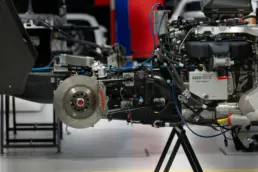
300 tonnes of challenging waste recycles – an Interzero client client success story
The initial problem:
An automotive parts manufacturer was seeking a sustainable method for managing waste from the production of vehicle lighting components and lamps. Due to the specific material composition (metal and electronic components permanently bonded to various types of plastic), the waste and defective components were difficult to sort and process.
Our solution:
We have implemented a comprehensive waste management service for the plant and redirected the stream of mixed plastic components (waste code 07 02 13) to another, more specialised recycling facility. The facility we work with has successfully separated various types of plastics, metals and electronic components into single-fraction streams, which can then be further processed using standard technologies.
Result:
The manufacturer has significantly reduced the costs of managing this fraction and simplified waste management by entrusting the organisation of the process to a single operator – Interzero. In just 8 months, it has handed over more than 300 tonnes of defective components and production waste for management.
Higher recycling, lower costs and other benefits
- Cost reduction
Sorting mixed waste has helped to reduce processing costs at the facility - An increase in recycling rates
The recovered raw materials were sent for reuse in other processes - Simpler waste management
The manufacturer has reduced the number and time required for tasks relating to the planning and booking of waste collections
Other environmental services for the automotive sector
management of all fractions of production, workshop and process waste
ongoing environmental consultancy
consultancy on PPWR, including packaging audits
developing bespoke waste management programmes for the automotive sector
fulfilment of EPR obligations in 31 European markets (EU-27, the United Kingdom, Norway, Serbia and Switzerland),
selection and servicing of balers and other waste compaction machinery
environmental audit of a production plant
FAQ
Our gThe proposed operational package provides for the transfer of all responsibilities relating to coordination waste collection to Interzero experts. Once we have started working together, we agree with the client on their preferred waste collection model (a fixed schedule, on-demand collections, or a combination of (both of these models) and your preferred methods of contacting your account manager at Interzero, which organises and oversees the acceptance process. We also usually recommend implementing the Interzero Waste Management Platform, which minimises both the number and the time required for tasks carried out by the client’s staff – allows you to plan a collection schedule and book collections with a single click (also in the optional Interzero mobile app OneApp (Poland) and automatically generates a waste transfer note. The role of the client’s waste management staff ends upon placing an order or…larranging for the collection and subsequent handover of the waste to our driver. For the coordination of all other activities, please contact recyclers Interzero is responsible for providing the waste documentation.
Yes. We provide a comprehensive waste management service for all types of waste from the sector automotive: post-production and process waste, defective batches of products, waste second-hand items (e.g. used parts, tyres, batteries and rechargeable batteries, used oil) and hazardous waste, the transport of which is governed by the ADR regulations and the obligation to register with SENT.
This requires an in-depth knowledge of the commodities market and the potential for processing and reusing post-production waste. The entire Interzero team of experts is involved in developing new waste management processes: from environmental advisers to account managers and regulatory experts, after specialists in the field of recycling and waste management. Account managers identify the needs and challenges of companies across various sectors on an ongoing basis, and then discuss them with a wider group of experts. This enables us to connect the waste producer with the recipient of the raw material, creating synergy and bringing benefits to all parties involved.
Formal regulatory responsibility remains with the business, although one partner may take on the majority of the operational responsibilities relating to waste management, reporting, product responsibilities, audit support and environmental consultancy. This provides the client with a single point of contact and ensures the coordination of environmental processes.
Environmental costs can be reduced, amongst other things, by choosing more cost-effective and sustainable waste management methods, increasing the recovery of valuable raw materials, optimising the frequency of waste collections, and regularly reviewing waste service charges.
The costs of the Regional Operational Programme (ROP), however, can be reduced primarily by selecting the most advantageous method of fulfilling a producer’s obligations in each market and regularly reviewing the rates offered by local producer responsibility organisations and recyclers. However, carrying out all these activities independently is very difficult – it requires constantly monitoring the market for environmental services and recyclable materials across many countries. The language barrier is also a significant factor, as it often prevents contact with local authorities and considerably complicates environmental reporting and compliance monitoring.
For companies operating in multiple countries, centralising EPR management can deliver additional financial and operational savings – it allows them to capitalise on the scale of their operations, reduce administrative costs and avoid having to maintain separate processes for each market. Interzero comprehensively takes over the EPR obligations of companies in the automotive sector and fulfils them across all EU markets. In addition, environmental consultants support businesses in implementing projects designed to reduce EPR fees, such as eco-designing packaging and developing reusable packaging.
Our experts help to organise environmental documentation, waste management processes and reporting so that they comply with ISO and OEM requirements, as well as applicable regulations. Thanks to auditable processes and expert support, we minimise the risk of non-compliance during audits carried out by clients and certification bodies.
The scope of liability for the client and Interzero depends primarily on legal regulations and, secondarily, on the provisions of the cooperation agreement. The client retains statutory liability as the waste holder or the entity placing the waste on the market, whilst Interzero supports them in fulfilling their obligations and minimising the risk of errors. Under the terms of the contract, the business may entrust Interzero with a range of activities relating to BDO services, such as registration, the preparation of waste documentation (KPO, KEO) and the reporting of waste weights and quantities.
The implementation is planned in such a way as to ensure continuity in data collection, documentation and the fulfilment of environmental obligations. The handover process involves an analysis of the current operating model, an implementation schedule and minimising the involvement of the client’s team.
We also work with other sectors

Contact

platformaodpadowa@interzero.pl