
Blog and newsletter
Stay up to date with environmental industry news! Follow legal updates and be the first to know! Sign up to Interzero's newsletter to receive information relevant to the environmental industry to your email. A fresh dose of knowledge and news from the world of ecology and sustainable development every month!

Digital support for PPWR obligations – introducing the ‘Check for Recycling’ tool
Interzero’s latest digital tool – Check for Recycling – is now available in Polish. Thanks to this update, packaging manufacturers can prepare EU declarations of conformity, assess the recyclability of packaging and manage documentation more quickly, conveniently and without any barriers, including language barriers.
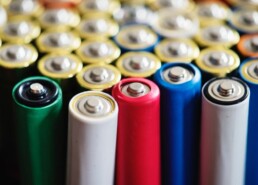
EU battery recycling targets remain unchanged – the European Commission has maintained the current levels
The European Commission has announced that the targets for battery recycling efficiency and material recovery set out in the Battery Regulation do not require any changes. This decision was preceded by a technical analysis carried out by the Joint Research Centre (JRC) – the Commission’s analytical support body. In a report adopted on 11 September 2026, the Commission noted that the current targets are ambitious yet achievable using the available infrastructure and technology.

The new 2026 waste catalogue – an overview of the planned changes
The Ministry of Climate and Environment has drawn up a proposal for a new waste catalogue, which is due to come into force before the end of 2026. However, businesses need not fear a complete overhaul of the catalogue – the changes proposed by the Ministry of Climate and Environment cover only 6 of the 114 sub-groups and focus on waste related to batteries.
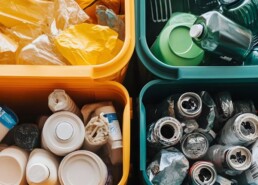
Packaging recycling performance classes in the PPWR – what do categories A, B and C mean?
For many years, packaging manufacturers were able to assess for themselves whether the packaging they designed was recyclable. In practice, this meant that similar designs could be assessed in different ways, and the term „recyclable packaging” itself did not always mean the same thing. The PPWR Regulation puts an end to this discretion – it establishes a uniform assessment and classification system that will enable the recycling performance of packaging and its compliance with eco-design criteria to be reliably determined. The result of this assessment will determine which of the three recycling efficiency classes the packaging is assigned to.

Declaration of conformity of packaging with the PPWR – what does it contain, when does it come into force, and who is required to draw it up?
The PPWR Regulation introduces an obligation to draw up an EU declaration of conformity for all packaging intended for the EU market. We explain what information the declaration should contain, who is responsible for drawing it up, and when it should be updated.

PPWR introduces limits on PFAS and hazardous substances in packaging
The European Union has long been working to improve the safety of packaging, particularly that intended to come into contact with food. Following the ban on bisphenol A (BPA), the time has come for further bans and restrictions – this time concerning PFAS and heavy metals. The PPWR Regulation sets permissible limits for specific substances and does not rule out the possibility that these strict requirements may be tightened even further in the coming years.

The European Commission is accelerating the circular transition of the plastics recycling sector
The European Commission has presented a package of measures designed to accelerate the European Union’s transition to a circular economy. These changes will initially focus on the plastics manufacturing and recycling sectors. The documents, published at the end of 2025, serve as a pilot ahead of the planned Circular Economy Act, which is intended to comprehensively regulate the market for waste and secondary raw materials in the EU.

When did the PPWR Regulation come into force? Timetable for the introduction of new obligations
On 12 August 2026, Regulation (EU) 2025/40 on packaging and packaging waste, known as the PPWR Regulation, came into force. It is worth noting that, as of that date, only some of the new requirements are in force – further obligations will be phased in until 1 January 2040, gradually replacing the provisions of the previous Directive on packaging and packaging waste. Check when the specific requirements concerning the design, labelling and placing of packaging on the market will come into force.

Importer, distributor and supplier under the PPWR – how do you define your role and scope of responsibilities?
The introduction of the PPWR Regulation requires businesses to correctly identify their role in the supply chain. This is because the scope of packaging obligations depends on whether the company acts as an importer, distributor, supplier or fulfilment service provider. Importantly, the same entity may fulfil several different roles simultaneously, and each of these involves separate requirements.

The manufacturer under the PPWR Regulation – who are they and what are their obligations?
Under the provisions of the PPWR Regulation, the role of manufacturer is not always fulfilled by the entity that physically produced the packaging in question. In some cases, the manufacturer of the packaging may be the brand owner, an importer or a distributor. Find out how the PPWR Regulation defines a manufacturer and learn about the obligations that this entity must fulfil.
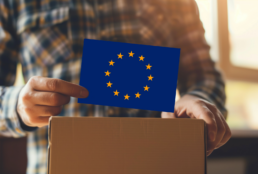
Who is a manufacturer under the PPWR Regulation? Definition, examples and obligations
The PPWR Regulation not only amends the requirements regarding the design and labelling of packaging, but also the method for determining the entity responsible for fulfilling the obligations arising from extended producer responsibility (EPR). Find out who is considered a producer under the PPWR and learn how to correctly determine your company’s role in various EU markets.
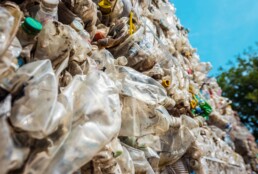
Plastic recycling in Poland – we still incinerate it more often than we recycle it
Although the levels of separate collection of plastic waste are rising year on year, Poland is still failing to realise the potential of the raw material it collects. A report published in May 2026 by Plastics Europe shows that most plastic waste does not end up being recycled, but is sent to incinerators. The low circularity rate for plastics is not merely an environmental issue – at a time when Europe is increasingly committed to the circular economy and is mandating the use of recycled materials, this situation could lead to serious problems with the availability of recycled raw materials and a decline in the competitiveness of Polish companies.
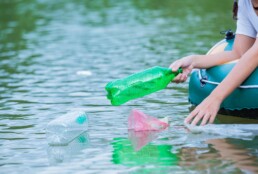
Fewer returnable bottles, more glass. What does the rubbish in rivers tell us about the waste management system?
On 30 April 2026, the annual „Clean Odra” campaign came to an end, during which volunteers collected litter from the riverbanks and the water for the fifth time. One stage of the campaign involved not only a major clean-up, but also an analysis of the composition of the waste, which served as a test of the effectiveness of Poland’s waste management policy and the new measures implemented over the past 12 months.
Ban on the destruction of unsold textiles – new obligations for the fashion industry from 19 July 2026
From 19 July 2026, large fashion companies will no longer be allowed to destroy unsold textiles – the ban comes into force on that date, although there will be certain exceptions. The new rules form part of the EU’s ESPR (Ecodesign for Sustainable Products Regulation), which promotes sustainable production and supports the circular economy.
Transboundary shipments of waste – new regulations and the DIWASS system
On 21 May 2026, Regulation (EU) 2024/1157 of the European Parliament and of the Council (EU) 2024/1157 of 11 April 2024, introducing the most significant reform of the rules on transboundary movements of waste (TPO) within the Community in over a decade. The new regulations are intended to strengthen controls over the international transport of waste, limit its export outside the EU and contribute to the development of the circular economy.
