We’re celebrating 20 years of Interzero in Poland!
We’re celebrating 20 years of Interzero in Poland!
W 2026 roku Interzero świętuje 20-lecie obecności na polskim rynku. Z okazji jubileuszu wracamy do początków – przypominamy pierwsze wyzwania, przełomowe momenty i sukcesy, które ukształtowały naszą firmę i otworzyły przed nami zupełnie nowe możliwości.
Od dwuosobowego zespołu do lidera branży – 20 lat dynamicznego rozwoju na polskim rynku
Nasza historia w Polsce rozpoczęła się jesienią 2006 roku. W październiku zarejestrowano spółkę działającą wówczas pod marką Interseroh, która weszła na silnie konkurencyjny rynek organizacji odzysku. Niewielki, zaledwie dwuosobowy zespół i skromna baza klientów oznaczały, że swoją pozycję musieliśmy zbudować od podstaw. Każda nowa współpraca pozwalała nam lepiej zrozumieć ówczesne wyzwania i problemy przedsiębiorców oraz zdobywać cenne doświadczenie w obsłudze firm działających w różnych branżach i na różną skalę.
Pierwsze sukcesy dodawały nam odwagi do podejmowania nowych wyzwań i rozwijania usług, które umacniały naszą pozycję. Stopniowo zaczęliśmy rozwijać doradztwo środowiskowe i handel surowcami wtórnymi oraz budować partnerskie relacje z zakładami przetwarzającymi odpady. Rynek docenił nasze wysiłki i zaangażowanie – grono naszych klientów sukcesywnie się powiększało, a dynamiczny, wielokierunkowy rozwój przyciągał do nas kolejnych specjalistów, którzy wnosili do firmy swoje doświadczenie i ekspercką wiedzę z różnych obszarów ochrony środowiska.
„Kiedy patrzę na dwadzieścia lat obecności Interzero w Polsce, myślę przede wszystkim o ludziach, którzy zdecydowali się z nami budować tę firmę. Wspólnie rozwijaliśmy ofertę, tworzyliśmy nowe zespoły i podejmowaliśmy kolejne wyzwania. Chciałabym, żebyśmy z taką samą ambicją i ciekawością szli przez kolejne lata i nadal dawali sobie przestrzeń na pomysły, z których mogą powstać następne przełomowe projekty”.
Anna Grom, Head of Interzero Circular Solutions
Strategiczne przejęcia i dalszy rozwój pod nową marką
Ważną rolę w rozwoju Interseroh odegrały fuzje i integracje z innymi podmiotami działającymi w branży ochrony środowiska. Już w 2011 r. przejęliśmy konkurencyjną organizację odzysku Zielony Punkt z Łodzi, zyskując ok. 150 nowych klientów i zaplecze magazynowe umożliwiające obsługę surowców wtórnych. Niedługo później pozyskaliśmy również portfel klientów organizacji odzysku Stolica, która kończyła działalność na polskim rynku. Ten konsekwentny i jasno ukierunkowany rozwój znacząco przyczynił się do wzmocnienia naszego zespołu – do Interseroh dołączali doświadczeni specjaliści, których wiedza i znajomość rynku pomagały nam sukcesywnie poszerzać ofertę i odpowiadać na potrzeby nieustannie rosnącego grona klientów.
W latach 2011–2015 nadal umacnialiśmy pozycję Interseroh na rynku usług środowiskowych. Po okresie intensywnych inwestycji firma osiągnęła rentowność i zaczęła generować stabilne zyski. Stworzyło to warunki do rozbudowy struktur sprzedażowych i oferty, która coraz wyraźniej łączyła usługi organizacji odzysku z gospodarką odpadami, recyklingiem i doradztwem środowiskowym.
Duże znaczenie dla rozwoju firmy miało przejęcie Polskiego Systemu Recyklingu (PSR) w 2015 roku. Dzięki tej transakcji portfel klientów Interseroh powiększył się o około 1200 przedsiębiorstw, a do naszych zespołów dołączyli pracownicy PSR, wnosząc swoją wiedzę i bogate doświadczenie poparte wieloletnią praktyką. Integracja obu organizacji znacząco zwiększyła skalę działalności – pozwoliła nam znaleźć się w gronie największych organizacji odzysku w Polsce i otworzyła nowe kierunki rozbudowy portfolio usług środowiskowych.
“Dwadzieścia lat temu zaczynaliśmy jako niewielka firma na rynku organizacji odzysku. Dziś jesteśmy organizacją, która patrzy na środowisko znacznie szerzej – nie tylko przez pryzmat obowiązków, ale przede wszystkim przez pryzmat biznesu, zasobów i przyszłości naszych klientów. Dla mnie największym sukcesem tych 20 lat jest to, że nigdy nie uznaliśmy, że osiągnęliśmy już wystarczająco dużo. Kiedy zmieniał się rynek, zmienialiśmy się razem z nim, a czasem staraliśmy się być o krok przed nim. Ta gotowość do zmiany, podejmowania odważnych decyzji i szukania nowych możliwości jest dziś jednym z naszych największych atutów. I właśnie z takim nastawieniem chcemy wejść w kolejne 20 lat.”
Paweł Lesiak, Prezes Zarządu Interzero
W kolejnych latach skupiliśmy się na uporządkowaniu wewnętrznych struktur Interseroh i budowaniu przewag konkurencyjnych wokół trzech głównych obszarów: działalności organizacji odzysku, gospodarki odpadami i doradztwa środowiskowego. W tym okresie rozwijaliśmy ofertę audytów oraz usług wspierających gospodarkę o obiegu zamkniętym. W latach 2020–2021 naszą pozycję na rynku dodatkowo wzmocniło przejęcie portfeli klientów dwóch organizacji odzysku opakowań KOBA i CP Recycling.
W 2022 roku, w ramach międzynarodowego rebrandingu, Interseroh zostało przemianowane na Interzero. Nowa marka podkreśliła kierunek, w którym rozwijaliśmy się od lat: zamykanie obiegu surowców i łączenie usług środowiskowych z innowacjami. Na tym etapie coraz większą rolę zaczęły odgrywać cyfryzacja oraz wsparcie przedsiębiorców w dostosowywaniu działalności do zmian regulacyjnych i rynkowych.
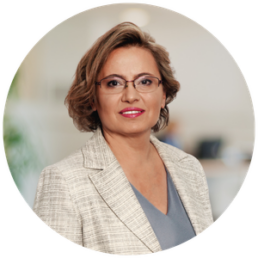
„W kolejne dwudziestolecie wchodzimy z ambicją współtworzenia przyszłości branży środowiskowej. Rozszerzona odpowiedzialność producenta, wymagania PPWR i postępująca cyfryzacja zmieniają sposób zarządzania zasobami w sektorze przedsiębiorstw i przekierowują uwagę na wartość materiałów, które jeszcze niedawno nazywaliśmy odpadami. Chcemy wykorzystać nasze doświadczenie, wiedzę i potencjał technologiczny, aby przeprowadzić przedsiębiorców przez tę transformację i wspólnie z nimi przybliżać wizję świata bez odpadów”.
Monika Grom, Wiceprezes Zarządu Interzero
Największe osiągnięcia minionego dwudziestolecia
Patrząc na 20 lat działalności Interzero w Polsce, z dumą wspominamy nasze przełomowe osiągnięcia, które dały początek kolejnym etapom rozwoju firmy. Wśród nich znalazły się nowe usługi, narzędzia i inicjatywy, które dziś wyróżniają nas na rynku firm doradztwa środowiskowego. Część z nich stała się fundamentem dzisiejszej oferty, a inne zwiększyły rozpoznawalność marki i pozwoliły nam dotrzeć do zupełnie nowych odbiorców.
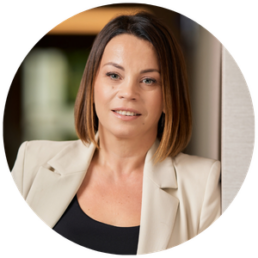
„Początkiem naszych sukcesów często było dostrzeżenie potrzeby przedsiębiorców, na którą rynek nie miał jeszcze gotowej odpowiedzi. Wiele takich obserwacji zdołaliśmy przekuć w konkretne usługi i narzędzia, które następnie rozwijaliśmy i wdrażaliśmy na dużą skalę. Byliśmy pionierami w sektorze środowiskowym – podejmowaliśmy ryzyko, inwestowaliśmy w tworzenie innowacji i wyznaczaliśmy kierunek rozwoju branży. To właśnie ta otwartość na nowe wyzwania i umiejętność przejścia od pomysłu do rozwiązania pozwoliły nam zbudować dzisiejszą pozycję Interzero”.
Agata Ryś, Członek Zarządu Interzero
Ambicje wykraczające poza działalność organizacji odzysku
Zaledwie rok po wymagającym debiucie na polskim rynku organizacji odzysku zaczęliśmy rozszerzać portfolio naszych usług. Od 2007 roku obok realizacji ustawowych zadań organizacji odzysku oferowaliśmy przedsiębiorcom również wsparcie w wypełnianiu obowiązków ROP i raportowania oraz profesjonalne doradztwo środowiskowe.
Tak wczesne wyjście poza działalność organizacji odzysku otworzyło przed nami nowe możliwości i stało się jednym z filarów naszego sukcesu. Pozwoliło nam też wejść w rolę wszechstronnego partnera, któremu przedsiębiorcy mogą powierzyć niemal wszystkie zadania z obszaru ochrony środowiska. Z biegiem czasu doradztwo, które początkowo jedynie uzupełniało działalność organizacji odzysku, stało się niezależnym segmentem naszego biznesu obejmującym m.in. audyty, sprawozdawczość, stałą obsługę środowiskową oraz webinary. Dzięki konsekwentnie realizowanej strategii wielokierunkowego rozwoju zyskaliśmy możliwość podejmowania się coraz bardziej złożonych projektów i towarzyszenia naszym klientom w kolejnych wyzwaniach.
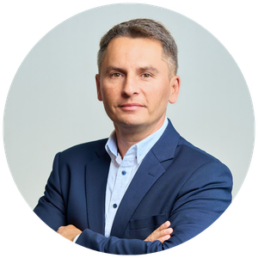
„Dziś całe otoczenie biznesowe bardzo dynamicznie się zmienia, poziom obsługi klientów ma kluczowe znaczenie przy wyznaczaniu strategii rozwoju Interzero i przez jego pryzmat zmieniamy nasze procesy i procedury. Ostatnie dwa lata to czas analiz, wyciągania wniosków i wdrażania usprawnień. Nasze ambicje, aby stać się najbardziej elastyczną firmą w branży, która potrafi zauważyć kreujące się potrzeby klientów i przygotować nowoczesne rozwiązanie wychodzące naprzeciw legislacjom i trendom prośrodowiskowym, to nasz główny cel. Zaufanie zdobyte przy jednym projekcie otwiera drogę do kolejnych wspólnych przedsięwzięć i pozwala budować długofalowe, satysfakcjonujące relacje z klientami”.
Tomasz Posiewka, Dyrektor Handlowy
Wieloletnie partnerstwa w gospodarce odpadami
Równolegle z doradztwem środowiskowym rozwijaliśmy obrót surowcami wtórnymi, m.in. makulaturą, folią oraz innymi tworzywami sztucznymi: butelkami PET, foliami (HDPE, LDPE). Sieć współpracujących sortowni i recyklerów budowana od pierwszych lat działalności Interzero w Polsce pozwalała nam łączyć potrzeby firm wytwarzających odpady z zapleczem technologicznym zakładów przetwarzania.
Stworzenie tej sieci było jednym z najważniejszych osiągnięć Interzero w obszarze gospodarki odpadami. Dzięki trwałym relacjom z partnerami mogliśmy zwiększać zakres oferowanych usług i podejmować się zleceń wymagających dostępu do wielu specjalistycznych technologii. Wiedza o materiałach, wymaganiach jakościowych i specyfice poszczególnych instalacji pozwalała nam projektować innowacyjne ścieżki zagospodarowania odpadów i dostosowywać je do indywidualnych potrzeb klientów. Przez lata tworzyliśmy zaplecze technologiczno-kompetencyjne, które dziś stanowi podstawę rozwoju naszych usług i umożliwia organizację całego procesu – od odbioru odpadów po przekazanie ich do dalszego zagospodarowania.
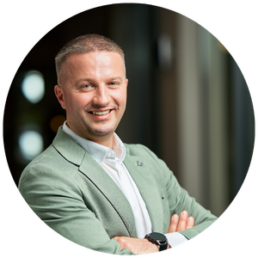
„Umiejętność połączenia wymagań recyklerów z realiami działalności przedsiębiorców jest jedną z naszych najważniejszych przewag. Lata współpracy z zakładami przetwarzania pokazały nam, jak duży wpływ na wartość odpadów ma sposób ich zbierania, sortowania i magazynowania. Dzięki tej wiedzy możemy pomagać naszym klientom w podejmowaniu decyzji i wdrażaniu zmian, które istotnie przekładają się na koszty zarządzania odpadami”.
Damian Olek, Sales Team Manager
Doskonałość operacyjna i rozwiązania technologiczne u źródła
Dopełnieniem kompleksowej obsługi w modelu one stop shop jest silne zaplecze operacyjne oraz oferta urządzeń do zagospodarowania i redukcji objętości odpadów bezpośrednio w zakładach i sieciach handlowych. Interzero dostarcza przedsiębiorstwom nie tylko usługi logistyczne i doradcze, ale również rozwiązania sprzętowe – m.in. belownice, prasokontenery czy kompostowniki – zapewniając ich pełną obsługę, serwis oraz elastyczne modele finansowania. Odpowiednio dobrana technologia pozwala klientom zoptymalizować przestrzeń magazynową, obniżyć koszty transportu i przygotować surowce do efektywnego recyklingu.
„Doskonałość operacyjna w Interzero to połączenie nowoczesnej technologii z doświadczeniem ludzi, którzy każdego dnia czuwają nad ciągłością procesów u naszych klientów. Ważnym filarem naszej działalności jest oferta maszyn i urządzeń – dostarczamy firmom belownice, prasokontenery czy kompostowniki oraz zapewniamy ich niezawodny serwis wraz z naszym zespołem. Pomagamy w ten sposób optymalizować gospodarkę odpadami już na etapie ich powstawania, redukując koszty logistyczne i zwiększając wartość odzyskiwanych surowców. Nie bylibyśmy tutaj, gdyby nie nasz doświadczony zespół operacyjny, który dba o płynne i bezpieczne działania biznesu, odpowiadając na zmiany w prawie legislacyjnym i będąc zawsze do dyspozycji klienta. Rozumiemy, jak ważny jest codzienny kontakt z naszym klientem, wsparcie i najwyższa jakość usług, co niezmiennie przekłada się na zaufanie do naszej marki.”
Izabela Nowak, Dyrektor Operacyjny Interzero.

Integracja usług środowiskowych w modelu one stop shop
Przez 20 lat zbudowaliśmy ofertę, dzięki której przedsiębiorcy mogą powierzyć nam zadania wymagające wcześniej współpracy z wieloma różnymi dostawcami. Interzero działa obecnie w modelu one stop shop, łącząc realizację obowiązków wprowadzającego produkty i opakowania z gospodarką odpadami, audytami, sprawozdawczością, doradztwem i edukacją. Klient nie musi więc samodzielnie koordynować pracy kilku niezależnych firm – wszystkie te zadania może powierzyć Interzero.
Ścisła współpraca naszych zespołów i harmonizacja działań z różnych obszarów sprawiają, że wdrażane rozwiązania wzajemnie się uzupełniają, a przedsiębiorca otrzymuje wsparcie na każdym etapie ich realizacji. Wnioski z audytu mogą znaleźć odzwierciedlenie w nowej organizacji odbiorów odpadów, doborze urządzeń albo usprawnieniu raportowania. Wdrożenie opakowań wielokrotnego użytku będzie wymagało organizacji logistyki zwrotnej, monitorowania liczby kolejnych użyć oraz prawidłowego znakowania każdego pojemnika. Model one stop shop pozwala nam uwzględniać wpływ decyzji podejmowanych w jednym obszarze na pozostałe sfery działalności środowiskowej firmy i koordynować cały proces – od analizy potrzeb po wdrożenie rozwiązań.
„Z perspektywy przedsiębiorcy wszystkie aspekty środowiskowe są ze sobą ściśle powiązane. Decyzja dotycząca projektu opakowania może wpływać na obowiązki sprawozdawcze, organizację zbiórki i możliwości recyklingu. Naszą rolą jest dostrzec takie zależności i pomóc klientowi ułożyć działania w spójną całość. Właśnie tak rozumiemy one stop shop – jako współpracę ekspertów wokół rzeczywistych potrzeb konkretnej firmy”.
Paweł Sosnowski, Dyrektor ds. Doradztwa Środowiskowego, Pełnomocnik Zarządu ds. Regulacji Środowiskowych
Cyfryzacja zarządzania odpadami dzięki Platformie Odpadowej Interzero
Wraz z uruchomieniem Platformy Odpadowej Interzero (POI) otworzyliśmy nowy rozdział w rozwoju firmy i staliśmy się liderem cyfryzacji w branży ochrony środowiska. Platforma była odpowiedzią na potrzeby przedsiębiorców, którzy poszukiwali prostego i zdigitalizowanego sposobu zarządzania wytwarzanymi odpadami. Połączyliśmy w niej funkcje związane z zamawianiem i planowaniem odbiorów, dostępem do dokumentacji, prowadzeniem ewidencji odpadów oraz kontrolą kosztów gospodarki odpadami.
“W dużych organizacjach wyzwaniem nie jest już sam odbiór odpadów, lecz efektywne zarządzanie informacją o odpadach. Przeszliśmy drogę od procesów opartych głównie na dokumentacji papierowej i rozproszonych działaniach do świata, w którym kluczową rolę odgrywają dane, automatyzacja i integracja systemów. Platforma Odpadowa Interzero została zaprojektowana właśnie z tej perspektywy, nie jako narzędzie do ewidencji, ale jako system wspierający podejmowanie decyzji w warunkach stale rosnących wymagań regulacyjnych. Automatyzacja codziennych procesów, integracja z BDO oraz dostęp do danych w czasie rzeczywistym pozwalają organizacjom ograniczać koszty, zwiększać poziomy odzysku i skuteczniej realizować cele zrównoważonego rozwoju. Platforma Odpadowa Interzero jest efektem naszych wieloletnich doświadczeń oraz odpowiedzią na potrzeby nowoczesnych organizacji, które oczekują nie tylko sprawnej obsługi procesów, ale także dostępu do danych wspierających podejmowanie trafnych decyzji biznesowych.”
Aleksandra Mikiel, Dyrektor ds. Rozwiązań Cyfrowych i Transformacji

POI stała się ważnym elementem naszej oferty – pozwoliła połączyć sprawną organizację odbiorów z planowaniem dalszego wykorzystania materiałów. Dzięki temu mogliśmy nie tylko koordynować istniejące procesy, lecz także projektować nowe rozwiązania dla odpadów wymagających niestandardowego zagospodarowania. Doświadczenia z kolejnych wdrożeń wykorzystywaliśmy do poszerzania funkcjonalności i dostosowywania Platformy do potrzeb podmiotów różnych branż. W 2025 r. nasze innowacje i osiągnięcia w zakresie cyfryzacji doceniły również gremia konkursowe – Platforma zajęła trzecie miejsce w konkursie Masters&Robots i została wyróżniona nagrodą Złote Innowacje FMCG & Retail.
Edukacja środowiskowa dla biznesu i całego społeczeństwa
Rola Interzero nie ograniczała się do przejmowania obowiązków środowiskowych – chcieliśmy też dzielić się naszą wiedzą z jak najszerszym gronem przedsiębiorców. Tę możliwość dała nam organizacja webinarów. Spotkania online pozwalały docierać do odbiorców z całej Polski, dostarczać im rzetelnej, eksperckiej wiedzy oraz odpowiadać na ich najbardziej palące pytania. Kolejne odsłony wykładów i sesji Q&A z ekspertami cieszą się coraz większym zainteresowaniem. Z biegiem czasu zaczęliśmy udostępniać je przedsiębiorcom bez opłat, a osoby zainteresowane dalszym pogłębianiem wiedzy zapraszaliśmy na płatne szkolenia prowadzone stacjonarnie oraz online.
Przez lata wsłuchiwaliśmy się w potrzeby i opinie naszych klientów, dzięki czemu udało nam się zbudować ofertę edukacyjną łączącą wiedzę o przepisach z praktycznym przygotowaniem do ich stosowania. Równolegle dążyliśmy do zwiększania świadomości środowiskowej pozostałej części społeczeństwa – uruchomiliśmy publiczne kampanie edukacyjne EkoPaka, Biuro Zero Waste i Eko bez kantów, których celem było przekazywanie wiedzy o odpadach i recyklingu różnym grupom odbiorców w sposób dostosowany do ich wieku oraz poziomu zaangażowania środowiskowego. Podczas czterech edycji kampanii EkoPaka dostarczyliśmy materiały dydaktyczne i plastyczne uczniom i nauczycielom z aż 700 klas szkół podstawowych w całej Polsce. Dzięki nim najmłodsi w ciekawy i inspirujący sposób uczyli się o segregacji oraz recyklingu różnych frakcji – papieru, bioodpadów, elektroodpadów i szkła. Specjalistki edukacji ekologicznej Interzero wspierały merytorycznie wychowawców, nauczycieli i ekoedukatorów oraz współtworzyły przestrzeń, w której placówki uczestniczące w kampanii mogły wymieniać się wiedzą, doświadczeniami i pomysłami na angażowanie dzieci z klas 0-3 w działania dla świata bez odpadów.
Stworzenie przestrzeni do wymiany doświadczeń i wiedzy środowiskowej
W pierwszej dekadzie działalności Interzero coraz wyraźniej odczuwaliśmy potrzebę stworzenia przestrzeni do rozmów o bieżących wyzwaniach środowiskowych. Z tej potrzeby wyrosła Interzero Environmental Conference, która od lat gromadzi przedstawicieli biznesu, ekspertów, organizacji branżowych i środowiska naukowego. Podczas kolejnych edycji wspólnie przyglądaliśmy się zmianom w przepisach i ich wpływowi na działalność przedsiębiorstw, dzieląc się doświadczeniami oraz szukając odpowiedzi na najważniejsze pytania branży.
W 2026 roku zorganizowaliśmy już XIII edycję wydarzenia, goszcząc w Łodzi niemal 200 ekspertów środowiskowych i przedsiębiorców. Program obejmował 13 prelekcji i cztery debaty poświęcone m.in. przyszłości opakowań, rozszerzonej odpowiedzialności producenta oraz wyzwaniom handlu internetowego.
Przez lata udało nam się stworzyć wydarzenie, którego wartość wykracza poza program wystąpień. Rozmowy w kuluarach pozwalają uczestnikom nawiązywać relacje, porównywać doświadczenia i znajdować partnerów do kolejnych przedsięwzięć. Dla nas są także źródłem wiedzy o potrzebach przedsiębiorców i inspiracją do dalszego rozwoju naszej oferty.
Ludzie i kultura otwartego dialogu
Za sukcesem dwóch dekad Interzero stoją nie tylko innowacyjne technologie i strategie biznesowe, ale przede wszystkim zespół ekspertów, którzy codziennie tworzą firmę w biurach w całej Polsce. Troska o rozwój talentów, tworzenie bezpiecznego środowiska pracy oraz ciągłe podnoszenie kwalifikacji to filary, na których opiera się kultura organizacyjna spółki.
„Przez 20 lat zmieniała się nasza branża, rynek i sama organizacja. Jedno pozostaje niezmienne – za rozwojem Interzero stoją ludzie. Ich wiedza, doświadczenie i gotowość do uczenia się pozwalają nam odpowiadać na kolejne wyzwania biznesowe. Dlatego rozwój kompetencji, otwarty dialog i środowisko oparte na zaufaniu traktujemy nie tylko jako element kultury organizacyjnej, ale jako ważny warunek dalszego rozwoju firmy. Chcemy, aby Interzero było miejscem, w którym ludzie rozwijają się razem z organizacją i mają realny wpływ na jej przyszłość.”
Magdalena Jendrych, Krajowy HR Biznes Partner w Interzero
Dwie dekady innowacji i zespół, który tworzy przyszłość
Dwie dekady obecności Interzero na polskim rynku to historia konsekwentnej ewolucji – od dwuosobowej reprezentacji przecierającej pierwsze szlaki w 2006 roku, po pozycję lidera gospodarki obiegu zamkniętego i doradztwa środowiskowego. Przez 20 lat firma nie tylko odpowiadała na bieżące potrzeby rynku, ale wielokrotnie wyznaczała nowe standardy branżowe: wdrażając kompleksowy model one stop shop, rozwijając unikalną sieć partnerów, nowoczesne zaplecze sprzętowo-serwisowe oraz tworząc pionierskie rozwiązania cyfrowe, takie jak nagradzana Platforma Odpadowa Interzero. Co ważne, za każdą cyfrą, nową technologią i kamieniem milowym historii Interzero w Polsce stoją przede wszystkim ludzie. To właśnie wiedza, inicjatywa i codzienne zaangażowanie ekspertów w biurach w Krakowie, Warszawie i Łodzi stanowią fundament sukcesu firmy. Wkraczając w kolejne dwudziestolecie i stawiając czoła nowym wyzwaniom regulacyjnym – od rozporządzenia PPWR i reformy ROP po wdrażanie systemów kaucyjnych – Interzero pozostaje elastycznym, przewidującym i odpowiedzialnym partnerem. Łącząc doradztwo, cyfryzację i doskonałość operacyjną, spółka przekłada wymogi prawne w korzyści biznesowe dla przedsiębiorstw, krok po kroku przybliżając nas do wspólnej wizji świata bez odpadów.

Contact

biuro@interzero.pl
The circular economy works: Interzero and Fraunhofer UMSICHT highlight its impact
The circular economy works – Interzero and Fraunhofer UMSICHT demonstrate tangible results
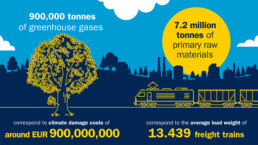
Recycling brings tangible benefits for the climate, helps to conserve valuable natural resources and reduces the economy’s dependence on primary raw materials. The latest study, „resources SAVED by recycling”, carried out by Fraunhofer UMSICHT, illustrates the scale of this impact. In 2025, Interzero’s recycling activities saved over 7.2 million tonnes of primary raw materials and avoid emissions in excess of 900,000 tonnes of greenhouse gases.
Recycling as a practical way to support climate protection
The growing demand for raw materials, climate change and pressure on global supply chains mean that the effective use of recycled materials is becoming increasingly important.
One solution is recycling, which allows materials already in circulation to be reused rather than relying on further virgin raw materials. Its actual impact has been analysed jointly for many years by Interzero and the Fraunhofer Institute for Environmental, Safety and Energy Technology UMSICHT.
The latest figures show that in 2025, Interzero kept approximately 2 million tonnes of recyclable materials in Germany, Austria, Poland, Italy and Slovenia. This has resulted in savings of over 7.2 million tonnes of primary raw materials. To give an idea of the scale – this is equivalent to the average load carried by approximately 13,439 freight trains.
Over 900,000 tonnes of emissions avoided
The benefits of recycling extend beyond the consumption of raw materials. Compared with production based on virgin materials, Interzero’s activities will have prevented emissions of over 900,000 tonnes of greenhouse gases.
This also translates into tangible economic value. Taking the interests of present and future generations equally into account, reducing emissions corresponds to approximately €900 million in avoided costs relating to the effects of climate change.
The data show that the circular economy is not merely a component of environmental policy. The appropriate use of secondary raw materials can also support economic resilience, reduce the demand for imported resources and lessen the vulnerability of businesses to disruptions in global supply chains.
Recycling plastics helps to save oil
This year’s edition of the study also highlights, for the first time, the impact of plastics recycling on crude oil consumption.
According to calculations by Fraunhofer UMSICHT, keeping approximately 1 million tonnes of plastics in 2025, this resulted in savings of around 3 million barrels of crude oil. This is roughly equivalent to 9.5 million 50-litre containers.
The calculations are based on a comparison of the energy requirements for the production of new plastics and for recycling processes. This demonstrates how replacing virgin raw materials with recycled materials translates into actual resource savings.
As he emphasises Jan Kroker, CEO of Interzero, recycling enables waste to be transformed back into valuable raw materials for industry. In this way, it contributes both to climate and resource protection and to reducing Europe’s dependence on imported raw materials.
Data illustrating the real-world impact of the circular economy
Reliable data is one of the key elements of the transition to a circular economy. It enables businesses not only to measure the environmental benefits of recycling, but also to make more informed decisions regarding the use of materials, packaging design and waste management.
The Fraunhofer UMSICHT study on Interzero’s activities is being carried out in accordance with international life-cycle assessment standards ISO 14040 and ISO 14044 and includes activities relating to recycling.
The results for 2025 illustrate the scale of the impact:
- over 7.2 million tonnes primary raw materials saved,
- around 2 million tonnes materials kept in circulation,
- over 900,000 tonnes greenhouse gas emissions avoided,
- around 3 million barrels of crude oil saved through the recycling of plastics.
These concrete figures show that closing material cycles can simultaneously support climate protection, conserve resources and strengthen the European economy’s security of supply of raw materials.
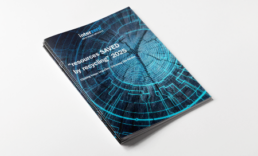
Leaflet for the study "resources SAVED by recycling" 2025
Contact
biuro@interzero.pl
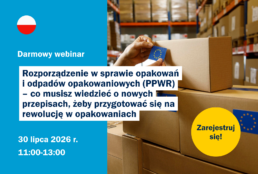
Regulation on Packaging and Packaging Waste (PPWR) – third date for the free webinar!
Third free webinar: The Packaging and Packaging Waste Regulation (PPWR) – what you need to know about the new regulations
Thank you for your tremendous interest in the last two webinars.
The number of registrations has reached the maximum capacity, which shows just how important this topic is to you.
In response to such high demand, we have decided to organise a third, free webinar session to enable everyone interested to take part.
The entry into force of the PPWR (Packaging and Packaging Waste Regulation) marks a new phase for the packaging market. Businesses will have to comply with a range of requirements relating to the design, use and placing on the market of packaging. These regulations apply in particular to manufacturers, importers, distributors and companies in the HoReCa sector.
- Share: FREE
- Date: 30 July 2026.
- Time: 11:00–13:00
- Format: online
* The number of participants is limited, so we encourage you to register in advance.
During the webinar, Pawel Sosnowski, Director of Environmental Advisory Services Board Agent for Environmental Regulation, will discuss:
- an overview of the key concepts and principles of the PPWR Regulation,
- an overview of the new requirements for participants in the packaging market,
- rules regarding the compliance of packaging with forthcoming regulations,
- changes relating to the phasing out of certain types of packaging,
- requirements for reusable packaging systems,
- the impact of PPWR on the hotel, restaurant and catering sectors,
- a timetable for the implementation of the regulations and key dates for businesses,
- a question-and-answer session with an expert.
This event is aimed at companies operating in the packaging sector, including manufacturers, importers and distributors, as well as businesses in the HoReCa sector. We also invite specialists dealing with issues relating to the compliance of products and packaging with current environmental regulations, as well as anyone interested in the practical aspects of implementing the PPWR Regulation.
See you at the next webinar on 30 July 2026
We encourage you to follow our LinkedIn profile, where we regularly post updates on legal changes, key industry news, and upcoming events and training sessions.
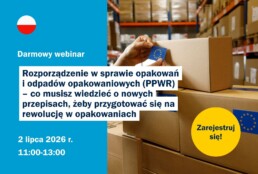
Packaging and Packaging Waste Regulation (PPWR) - webinar
Free webinar: Packaging and Packaging Waste Regulation (PPWR) - what you need to know about the new legislation
Thank you very much for showing such great interest in our recent webinars on PPWR!
In response to such high demand, please complete the form below to watch the webinar recording.
The PPWR (Packaging and Packaging Waste Regulation) introduces a number of new obligations for businesses operating in the area of packaging and packaged products. The upcoming regulations will have a significant impact on manufacturers, importers, distributors and the HoReCa industry.
Admission: free
During the webinar, Pawel Sosnowski, Director of Environmental Advisory Services Board Agent for Environmental Regulation, will discuss:
- basic definitions introduced by the PPWR,
- the new responsibilities of the different business groups involved in the supply chain for packaging and packaged products,
- the conditions to be met by the packaging to be introduced,
- a ban on certain packaging formats,
- requirements for reusable packaging to be introduced,
- obligations of the HoReCa industry under the PPWR,
- a timetable for the entry into force of the various requirements and obligations,
- Q&A session.
The webinar is aimed at entrepreneurs, manufacturers, importers, distributors, representatives of the catering and hospitality industry and all those responsible for the environmental compliance of products and packaging.
Once again, thank you for your trust, and we are delighted to be able to provide valuable content for such an engaged community.
See you at the next Interzero webinars!
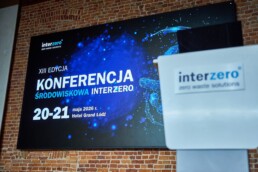
Interzero 2026 Environmental Conference - report on the 13th edition
Record attendance, heated debates and key industry challenges - a summary of the Interzero 2026 Environmental Conference
What was discussed at the Interzero 2026 Environmental Conference?
Record attendance, four expert debates and dozens of questions from the floor - this is how the 13th edition of the Interzero Environmental Conference, held on 20-21 May 2026 at the Grand Hotel in Łódź, can be summarised in a nutshell. The event was attended by almost 200 environmental experts and business representatives, and the intense discussions confirmed that the industry today faces some of the biggest regulatory challenges of recent years.
On new regulations and business challenges at the 2026 Environment Conference
New obligations for introducers, the future of packaging design, extended producer responsibility and digital product passports were just some of the topics that dominated the 13th edition of the Interzero Environmental Conference. The agenda included 13 lectures and four panel discussions, Each panel provided an opportunity to confront different perspectives - business, legislative, scientific and environmental - and was the starting point for further discussions outside the conference hall. Each panel provided an opportunity to confront different perspectives - business, legislative, scientific and environmental - and became a starting point for further discussions outside the conference room.
This year's Interzero Environmental Conference has once again confirmed its position as one of the most important environmental events in Poland. I am extremely pleased that we managed to invite not only environmental experts, but also representatives of business, industry organisations and the scientific community to the discussion. Numerous questions from the floor and interactions between panellists and participants showed that the entire industry today needs a space for the exchange of experiences and dialogue on the directions of legislative changes. I am proud that we managed to create such a space at the Environmental Conference. - said Agata Ryś, Member of the Management Board of Interzero.
The strategic partners of the 13th Environmental Conference were the company Woodeco, the market leader in wood-based materials, and the Polish Chamber of Recovering and Recycling of Packaging (PIOIRO).. Bergmann, a manufacturer of waste management machines, also became a partner. Honorary patronage for the event was taken up by Joanna Skrzydlewska, Marshal of the Łódź Voivodeship, Hanna Zdanowska, Mayor of Łódź, UNEP/GRID-Warsaw, IOŚ-PIB, the Lewiatan Confederation, the Problematics Foundation and PARP. Industry patrons, on the other hand, included GS1 Poland and the Institute for Innovation and Responsible Development innowo.
PPWR and ROP at the centre of the 2026 Environmental Conference
In line with previous editions, this year will also The conference themes revolved around new environmental regulations and their effects, and the phrases „PPWR” and „extended producer responsibility” were used in all cases.
The discussion on legislative changes was opened by Interzero's Executive Vice President, Paweł Lesiak with a lecture From regulation to practice: how PPWR and ROP affect companies in Poland and the EU. Using practical examples Interzero's vice-president presented to the conference participants the solutions that businesses are already implementing today to meet new environmental obligations. He also outlined the opportunities and risks for business associated with the introduction of the PPWR regulation and the growing uncertainty over the shape of the new ROP system in Poland.
Similar in nature was the lecture by Paweł Sosnowski, Director of Environmental Consultancy and Plenipotentiary of Interzero's Management Board for Environmental Regulations, who discussed the new packaging regulations in detail in the EU and outlined the timetable for the introduction of further obligations and requirements. His speech was not short of legislative tidbits and behind-the-scenes information about the implementing legislation currently being developed to supplement the provisions of the PPWR.
In addition to the two main legislative strands, the agenda of the Environmental Conference also touched on Regulation (EU) 2024/1157 on waste shipments, which took effect on 21 May 2026.The new rules on transboundary waste shipments and the Przemysław Kurowicki, expert on cross-border waste shipments, talked about the functioning of the EU DIWASS system..
Four debates, dozens of questions and a lively exchange of experiences
Of particular interest to participants and invited guests were the expert debates that diversified the programme of the 13th Interzero Environmental Conference. The common denominators of all discussion panels were New regulations - PPWR and ROP - and their impact on the textile, packaging and e-commerce industries. As the participants in the debate highlighted The waste hierarchy in practice: PPWR from the perspective of producers, processors and consumers, The recent legislative changes do not only affect the management of packaging waste, but the entire life cycle of packaging. Their effects will therefore be felt by manufacturers, importers, logistics companies and the e-commerce sector.
The discussion on e-commerce reignited during the last debate of the conference E-commerce in the face of the green transition: how Polish and European environmental regulations will change e-commerce in the coming years, attended by:
- Mateusz Ostrowski - lawyer and web developer,
- Łukasz Czarnowski - EPR expert, International Key Account Manager at Interzero,
- Anna Bojja - Allegro regulatory expert,
- Jan Banaś - founder and managing director of Koceo.
Experts pointed out the need for equal treatment of all players on the EU market while emphasising the role of authorised representatives to facilitate the enforcement of environmental obligations for companies conducting cross-border e-sales.
Not so long ago, e-commerce waste was nobody's business and the responsibility for its management fell on consumers and local authorities. Now the EU is making it clear: the polluter has to pay and take responsibility for what it puts on the market. This is a step in the right direction - e-commerce is already responsible for 20% of sales, the hallmark of which are cardboard boxes, foil packets and bubble envelopes. Our virtual shopping activity will generate more and more tangible waste and increasingly broaden producer responsibility. Thus, the demand for EPR and e-commerce waste management services will grow. As Interzero, we are already prepared to provide these, regardless of the scale of the producer's operations. - Lukasz Czarnowski of Interzero said shortly after the debate.
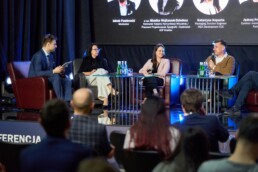
The most talked-about part of the Environmental Conference was the debate on the future of packaging. The panellists considered, whether it is possible to create the „perfect package”, that meets the expectations of producers and consumers, meets logistical and legislative requirements without losing functionality.
The behind-the-scenes of eco-design and recycling of packaging materials
The topics of the practical aspects of the Packaging Ordinance and the challenges of eco-design of packaging resonated not only in the debates, but also in the individual talks by experts. The wider context of the effects of PPWR was presented by Dr Manica Ulcnik-Krump of Interzero Plastic Innovations emphasising that the first difficulty arises right from the start - when sourcing quality recyclate, which is currently a scarce commodity.
Jedrzej Przeździęk, Chief Marketing Officer (CMO) at Paxit.pl, raised the interesting issue of reducing the void ratio in cardboard packaging and presented design options more effective packaging for e-commerce.
An inspiring discussion on the relationship between recycling and the use of virgin wood was undertaken by representatives of Woodeco, which was a strategic partner of this year's Environmental Conference. In their presentation Aleksander Majerz and Bogdan Warchoł emphasised the importance of wooden packaging for GOZ - They are the main source of recycled wood and at the same time one of the biggest beneficiaries of the recovered raw material.
What might the future look like? Tales of the digital and bubble revolution
On the second day of the event Łukasz Czarnowski, International Key Account Manager and EPR expert, highlighted the growing problem of waste generated by the development of the digital economy and e-commerce. He also outlined the risks posed by legislative delays in implementing a proper ROP model and introducing the institution of an authorised representative. As the expert concluded: as a result, we all contribute to the waste coming to us from other countries.
Interesting information was provided by presentation by Magdalena Fertsch-Ślęk from GS1 Polska, who explained the topic of digital product passports (DPP) and their relevance to the circular economy. Participants were able to learn how the Digital Product Passport is supposed to work in practice and even see a sample passport developed according to GS1 standards.
A respite from the legislative difficulties and challenges proved to be a lecture by SodaStream representatives - Katarzyna Konwinska, Head of Marketing and Bubble Revolution SodaStream CE and Ireneusz Janiczek, Brand Manager from SodaStream Poland, who argued that the whole world needs positive messages and better, optimistic stories. These are the ones that more effectively motivate consumers to change their habits to more sustainable ones - without pressure, without fear and without guilt-inducing messages.
Not just debates - ASP exhibition and partner zone during the Environmental Conference
Events related to the Interzero Environmental Conference took place not only on stage, but also off stage. There were dedicated networking spaces for participants and a stands of partners Woodeco and SodaStream, where sustainable products from both brands were on display. The exhibition area also included a display of Interzero eco-equipment and Interzero Advisory point, where experts answered questions related to current legislation, environmental obligations and reporting.
A new feature of the 13th Environmental Conference was the exhibition „Packaging - Need or Excess?” by students of the Faculty of Industrial Forms at the Academy of Fine Arts in Krakow. It presented original packaging designs for everyday products developed according to the principles of circularity, material minimisation and eco-design. In many cases, the student concepts touched on exactly the same issues that the experts discussed during the debates on the future of packaging.
Thank you for co-creating the biggest event of the environmental industry!
The 13th edition of the Interzero Environmental Conference is now history, and the topics discussed and the cooperation established behind the scenes will continue to change the face of the environmental protection industry for many months to come. A large role in this was played by the event's media partners - Rzeczpospolita, the Chamber of Electronic Economy and the rp.pl, Chemia i Biznes, Plastech, ecoekonomia, ESGinfo.pl, tworzywa.org, RynekPapierniczy.pl, Polska Ekologia and Świat Druku portals - who made sure that information about the conference reached as wide a circle of recipients as possible. To all those present in the conference halls of the Grand Hotel thank you for your participation and active participation in the discussions.
We encourage you to keep an eye on future events organised by Interzero and We would like to invite you to the Interzero 2027 Environmental Conference today.
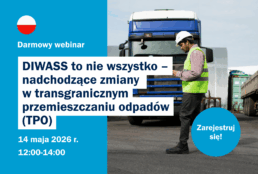
Free webinar: DIWASS is not everything - upcoming changes in transboundary movements of waste (TPO)
Free webinar: DIWASS is not everything - upcoming changes in transboundary movements of waste (TPO)
Does your company transport or manage waste abroad? Or do you want to make sure you are operating in compliance with cross-border waste shipment regulations? Join our free webinar titled. “DIWASS is not the whole story – upcoming changes to the transboundary movement of waste (TPO)” and learn the most important rules!
Form: online
Admission: free
Scope:
During the meeting, Przemyslaw Kurowicki, an expert in cross-border waste shipments with 19 years of experience in the enforcement and control of waste management and international waste transport regulations will discuss:
- Dividing the world for the purposes of TPO - the origins of regulation and its relevance in practice.
- TPO procedures - which to use and what determines their choice.
- DIWASS - digitisation of TPO processes and its impact on companies' operations.
- The EU's move towards self-sufficiency - implications for waste shipments within the EU.
- Waste exports outside the EU - planned restrictions and their potential impact on the market.
- Plastic waste and WEEE shipments - key challenges and responsibilities.
- Control and sanction system - competent authorities and direction of change in enforcement.
- Draft national TPO solutions - what to expect and how to prepare.
- Q&A session
Transboundary movements of waste (TPO) plays a key role in the European and global closed loop economy. It allows the legal and controlled movement of waste between countries, while ensuring high standards of environmental and human health protection. Knowledge of current procedures and upcoming changes is today not only a legal requirement, but also an essential element for safe and competitive business in the waste industry.
Contact
biuro@interzero.pl
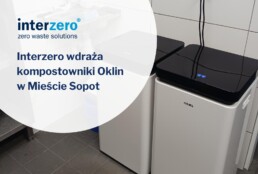
We boast another successful collaboration! Interzero implements Oklin composters in the City of Sopot
We boast another successful collaboration! Interzero implements Oklin composters in the City of Sopot
The City of Sopot can enjoy new compact and environmentally friendly equipment to process food waste at source. This is the result of fruitful cooperation with Interzero - we took care of the comprehensive service of local government facilities: from analysis of their needs, through selection of the best solutions and quoting, to implementation, installation and after-sales service. Let's take a look behind the scenes of a joint project between the City of Sopot and Interzero.
Successful implementation of Oklin composters - Sopot received 21 new units
In the Sopot collective catering establishments stood modern electric composters Oklin GG02, which convert catering waste into a valuable fertiliser - pre-compost. The implementation of the 21 units is result of the cooperation between Interzero and the City of Sopot, which has been applying innovations in waste management and actively working towards sustainable development and GOZ.
We have installed Oklin compact composters in 3 kindergartens, 5 schools, an orphanage and a nursing home. They enable Sopot establishments to process kitchen waste at source, reducing costs and time-consuming operations related to their segregation, storage and collection. The whole project is also part of in the development strategy of the city of Sopot, which aims, among other things, to ensure environmental security for residents by improving the quality of the waste management system and increasing separate collection.
From inspiration to implementation - the Environmental Conference as a prelude to fruitful cooperation
The impetus for action came from discussions with local government representatives held in connection with the organisation of the 2024 Environmental Conference and during the event itself, which was held under the honorary patronage of the Mayor of the City of Sopot. It was there Participants and invited guests could not only familiarize themselves with the Interzero eco-equipment range, but also to test them and discover the practical aspects of their operation. There, the decision was made - let's work together for a world without waste!
Preparation of an individual offer for the City of Sopot and the sales of Oklin GG02 composters were handled by Jarosław Dymek, Interzero Service Coordinator, who also oversaw the implementation and installation of the equipment in the Sopot facilities. Undoubtedly the success of the whole project has attracted the interest of the national media - You could hear about electric composters for example in the programme Czysta Polska on Polsat News and read in an article published by the website Green INTERIA.
Oklin electric composters in local government catering facilities
The subject of the collaboration with the City of Sopot was Oklin compact electric composters for smaller businesses, catering establishments and households. They take up little space and are simple to operate and maintain, while being very efficient. After a 2-week start-up period, each GG02 composter can process up to 4-5 kg of food waste per day.
From the perspective of the employees of the catering facilities in Sopot, an important benefit is the following no segregation of food waste - The Oklin GG02 composters process not only biowaste, but also meat, small bones, fish, eggshells, leftovers from meals (e.g. soups, sauces, stews, salads), dairy products and even biodegradable PLA/CPLA items and compostable disposable utensils.
„We can put all the leftovers from dinner in here. We don't have to throw them in the bin, we just recycle them. After a day, they make great compost.” - says Justyna Gazda from the Sopot DPS in the programme Czysta Polska on Polsat News.
The equipment is fully compliant with legislation and the HACCP system. The automated composting process takes an average of 24 hours - during which time the the volume of kitchen waste is reduced by up to 85-90%.
„From 5 kg of meal waste, about 300 g of good compost can be obtained in 24 hours.” - summarises the Deputy Mayor of Sopot, Michał Banacki, in an interview with Polsat News.
Cooperation between Interzero and the City of Sopot on the way to GOZ
Implementation of electric composters in facilities managed by the local authority has enabled Sopot to take the next step towards creating a local circular economy.
The Oklin GG02 devices installed in the Sopot facilities allow:
- processing of food waste on site,
- reducing the environmental footprint of food waste (no need for transport, sorting, composting, digestion or other management methods),
- reducing the weight of landfilled waste,
- the rapid conversion of waste into a valuable product that can be used as a natural fertiliser.
„We have a huge recreational area here, a garden and a patio, so we have somewhere to dump it all,” says Ilona Gajewska, deputy director of the Social Care Home in Sopot, which received two Oklin GG02 composters.
The use of the recycled waste product has enabled Sopot's facilities to create their own closed-loop circuits and opened the way for the local government to reduce waste management costs and move closer to meeting recycling and landfill targets.
„Less waste goes to landfill, which means that there is also a reduction in the cost of waste disposal”. - admits vice-president Michal Banacki.
A number of tangible benefits from the implementation of our Oklin GG02 composters led the City of Sopot to also encourage its residents to invest in similar equipment. Individuals and entrepreneurs can count on a grant for the purchase of such a composter, which is paid from the municipal budget. In addition, they receive a reduction in the waste collection fees payable to all property owners who have a composter (traditional or electric).
For the time being, however, only those with single-family houses will benefit. As Anna Wołodźko, director of the municipal economy department at the municipal office in Gdańsk, emphasised in her statement for Polsat News, it may not be long before the residents of multi-family houses will also benefit in a similar way:
„There is an amendment to the law in play, which includes the possibility of composting in multi-dwelling developments.”
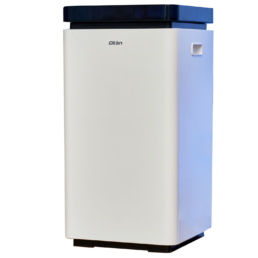
How does the Oklin GG02 electric composter work?
Oklin GG02 is an electric composter that, in a short time breaks down food residues placed in it into steam, carbon dioxide and pre-compost. The long-lived Acidulo™ micro-organisms, which are resistant to the salt and acids found in food products and to the heat generated during composting, are responsible for processing food waste. The entire process takes place under aerobic conditions - The unit draws in the air through an inlet port, uses the oxygen it contains and then purifies it in a deodorising system. Thanks to this the air coming out of the outlet is free of unpleasant odours.
Before the first cycle, it is necessary to activate the Acidulo™ micro-organisms contained in the package included with the unit. Once they have been thoroughly mixed with water, the Oklin GG02 is ready to go. To start composting, pour the kitchen waste into the hopper and close the lid tightly. Further stages of the process are automatic - the unit sets the blades in motion to slowly mix the food scraps with the sawdust containing Acidulo™ micro-organisms. Continuous mixing allows the load to heat evenly and speeds up the composting process. Approximately 24 hours after loading, the food waste is transformed into raw pre-compost - a light, dry fertiliser with a slightly acidic smell and a consistency similar to fine sawdust or dried coffee grounds. It can be used in horticulture when mixed with soil or leaves at a ratio of 1 part pre-compost to 10 parts soil or leaves.
The Oklin GG02 electric composter is designed for use indoors or under a canopy. A 230V electrical outlet is necessary for the installation of the unit. The outlet hose discharging the air with steam must be connected to a sewer drain (behind the trap), to a ventilation system or led outside the room. The unit operates continuously - once composting is complete, it automatically enters energy-saving mode to reduce power consumption and to keep it ready to process further batches of food waste.
Contact
biuro@interzero.pl
35 years of Interzero: a story that shows that the circular economy makes sense
35 years of Interzero: a story that shows that the circular economy makes sense
Not every company can say that it has consistently changed the way entire industries think for 35 years. Interzero is one of those exceptions. The jubilee is not just a symbolic anniversary, but an opportunity to tell the story of courage, vision and innovation that was ahead of its time - and today sets the course for a sustainable economy in Europe.
From regulation to innovation - how it all began
Interzero's origins go back to the early 1990s, when the topic of producer responsibility for packaging waste was just beginning to break through in the minds of companies. Even then, the organisation focused on systemic solutions: creating effective collection, sorting and recycling mechanisms that realistically close the cycle of raw materials. What was initially a response to regulation soon became the impetus for building a new business model - one based on the circular economy.
Today, the vision of a world without waste is not a marketing slogan for Interzero, but the foundation of its operations. The company has been proving for years that resource conservation and economic success can go hand in hand. Closed material cycles, intelligent collection systems, advanced sorting technologies or high-quality recyclates are the results of a consistent combination of operational knowledge and innovation.
Importantly, Interzero does not operate in isolation from market realities. It supports B2B clients across Europe, designing solutions tailored to specific industries and challenges - from environmental obligations to material efficiency to ESG reporting.
Services that have evolved with the market
Over the course of 35 years, Interzero's portfolio has developed significantly. In addition to the classic recycling solutions, there have been, among others:
- comprehensive waste management services for businesses,
- environmental and strategic consultancy in the area of sustainable development,
- reverse logistics and product close-out systems,
- digital tools to support the management of environmental data, waste management and carbon footprint,
- advanced sorting facilities and production of certified secondary raw materials.
This proves that Interzero is not only responsive to change, but often ahead of it - co-creating market standards.
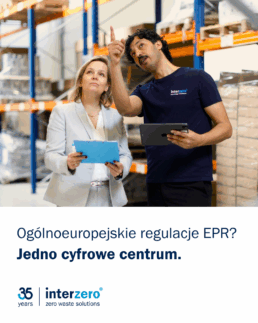
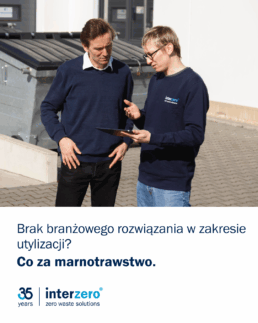
We take care of packaging compliance with EU-wide EPR, all in one place and always up to date.
We offer modern eco-equipment, which support companies in efficient and sustainable waste management.
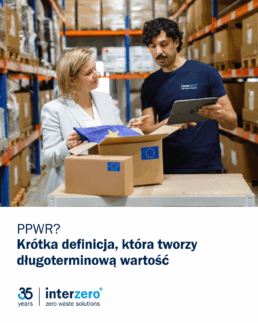
We support companies in preparing for the requirements of PPWR.
Looking to the future
The 35th anniversary is a moment of reflection, but also a clear signal: this is only the beginning. There are further challenges ahead for Interzero - industry transformation, increasing regulatory requirements, pressure to reduce emissions and real reductions in resource consumption. The answer remains what has been the company's DNA from the beginning: innovation, boldness in thinking and consistency in action.
Interzero's anniversary is a reminder that change is possible - if you have the vision and determination to make it happen. And an economy without waste? Thanks to companies like this, it stops being an idea and becomes a standard.
Mixed waste a clue for ROP? Introducing the „black bag” analysis report”
News
Nearly half of all municipal waste disposed of in the „black bag” should not end up in it at all, according to an analysis we conducted in cooperation with the Częstochowa University of Technology as part of the UNEP/GRID-Warsaw Climate Leadership programme. The study covered mixed municipal waste from various Polish installations. The aim was to qualitatively analyse the residual fraction and, based on this, identify product groups that could be included in the ROP system.
Field surveys at MBP facilities best source of waste stream data
Extended producer responsibility and how to implement it in Polish conditions are currently among the most popular topics of discussion in the environmental industry. While producer representatives and recycling and waste management experts debated the most favourable shape of the ROP system in Poland, we we rolled up our sleeves and examined the direction in which the national ROP model could develop.
The latest report prepared by the scientific community in cooperation with Interzero provides only hard data - not from declarations or anonymous surveys, but... from real bags of waste collected from residents. Thorough manual analysis of the so-called „black bag”, i.e. mixed municipal waste, The survey allowed us to check what actually ends up in the residual fraction. We conducted it on samples of waste from urban and urban-rural areas, delivered to five installations during the spring and summer:
- Częstochowa Municipal Corporation Ltd. (CzPK),
- Orli Staw Municipal Waste Disposal Plant,
- Municipal Utilities Company in Katowice,
- Przedsiębiorstwo Gospodarki Komunalnej Sp. z o.o. in Radomsko,
- MASTER - Waste and Energy Sp. z o.o. in Tychy.
At each installation, we conducted the survey twice, at different times of waste import. Taken from the plate of the sorting plant waste samples were manually sorted, separated into material fractions and then weighed. Each time, the research team paid particular attention to items of a specific nature, regardless of whether their presence in the „black bag” was in accordance with the principles of selective waste collection (JSSO).
Expectations versus reality - what are we really throwing into the black bag?
The „black bag” analysis report reveals what many people would rather not admit - the quality of separate municipal waste collection still leaves much to be desired. After adding up the data collected in the course of the survey, it turned out that as much as 42% by weight of mixed waste are the raw material fractions, of which:
- plastics - 20%,
- paper - 6%,
- bio-waste - 5%,
- glass - 4%,
- aluminium - 2%.
Due to the large amount of unidentified waste contaminated with wet fraction, the actual share of plastics in the mixed waste stream may be even higher.
The remainder of the sample analysed was:
- Wet fraction (biowaste and unidentified mixed waste) - 46%,
- hygiene waste (e.g. nappies) - 5%,
- Textiles - 5%,
- building and renovation materials - 4%,
- wood - 1%,
- highlighted items - 2%,
- packaged food scraps, medical waste, toys, hairdressing mix - less than 1% for each fraction.
The exact material composition of each sample tested can be found in the test report.
Subscribe to the newsletter to download the report!
Remember that you can unsubscribe at any time.
Effective ROP needed now
On the basis of an analysis of the data obtained, together with experts from the Częstochowa University of Technology and UNEP/GRID-Warsaw, we have identified several product categories which should be covered by the extended producer liability scheme in Poland:
- disposable hygiene products (nappies, sanitary towels, tampons, sanitary pads and other disposable beauty/spa products) as a group of waste with low recycling potential and high management costs,
- children's toys and accessories (including sports, beach and vehicle accessories) as products for which no end-of-life management is foreseen,
- disposable medical products (gloves, masks, syringes, needles, other medical devices),
- products generating dust and ash (e.g. solid fuels),
- clothing and textiles.
In developing the recommendations, we drew on the experience of other EU countries that have long had extensive ROP systems in place. Of particular importance was the analysis of the French EPR system including, among others, clothing and home textiles, toys, sports and leisure items and disposable hygiene products.
The study of the morphology of „black bag” waste also provided an opportunity to verify the effectiveness of the Polish ROP system, in which producers failing to achieve minimum recycling or recovery levels are obliged to pay a product fee. After analysing the data, we formulated a list of products for which it would be advisable to revise the regulations and fee rates. It featured:
- used tyres,
- small-scale electro-waste (mainly electronic toys, light bulbs and small electrical and electronic equipment),
- packaging for oils, paints and chemicals,
- multi-material packaging and difficult to recycle (e.g. multilayer films, sachets).
According to Przemysław Kuna, Team Leader in the Waste Management Competence Center Interzero team, who took part in the fieldwork:
In the course of the research work and the analysis of the results of the report, it became evident that for the individual fractions, the implementation or strengthening of Extended Producer Responsibility (EPR) funding should be considered accordingly. Mixed waste is a source of materials that can still be recycled and used, the ROP needs to support these activities on many levels, not only financial and organisational, but also educational and communication.
Orientations for further regulatory and operational activities
The results of the survey indicate that the scale of the problem requires action beyond separate collection alone waste. Due to the high share of plastics (including packaging) in the mixed waste stream, we recommend that the planned ROP system for packaging should include funding for the separate collection and the cleaning of this fraction. A necessary element of such a ROP should be ecomodulation of charges rewarding packaging that is easy to empty and clearly labelled.
It is also necessary to development and implementation of a strategy to reduce the proportion of „wet fraction” in the municipal waste stream. The strategy would include both communication and education aspects, as well as presupposing a review of the scope and effectiveness of existing measures under the anti-waste legislation.
Parallel to system changes, care should be taken to educate the public on the principles of sorting all fractions of municipal waste. This is because the report has brought to light a number of undesirable practices that lead to losses of raw materials and increase waste management costs. The samples analysed revealed, among other things:
- large quantities of green waste,
- food packed in plastic bags,
- out-of-date packaged food,
- products packed repeatedly in thin plastic bags,
- construction waste, medical waste, hazardous waste (including packaging of hazardous substances) and textiles.
It is therefore necessary to continue carrying out environmental education activitiesof which raising awareness on proper waste management and information on the availability of alternative reusable products.
The observations, recommendations and conclusions contained in the report will form the basis for further educational, regulatory and strategic activities by Interzero and UNEP/GRID-Warsaw.
Merry Christmas from Interzero
On the occasion of Christmas and the upcoming New Year, we would like to wish you warm wishes.
May this festive season bring you peace, rest and joy with your loved ones. We also wish you health, prosperity and success in the coming year, both in your professional and private lives.
Merry Christmas and a happy New Year!
Best wishes from the Interzero Group in Poland