


New Interzero report “Between plus and minus”
On the occasion of Battery Day, as part of the Eco no edges campaign, we are publishing a research report “Between positive and negative – what do Poles know about batteries and how do they sort them?” . The results are surprising. Despite being aware of the obligation to selectively collect waste, many of us still do not fulfil it. Poles perceive batteries as harmful both during production and storage. They also considered recycling dangerous for the environment. Despite many fears about batteries, we do not think about the power source in our devices.
Never before in history have we produced and consumed so many batteries. According to McKinsey & Company forecasts, their market will grow at a rate of 25% annually, and in the case of lithium-ion cells it may reach 30% annual growth by 2030. This demand is fueled, among others, by: through the development of portable digital technologies, energy banks and electromobility. With this dynamic progress in the battery industry, the question arises about the future of the management of this new waste.
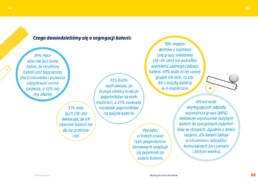
In our latest study entitled " Between plus and minus" we asked about Poles' habits regarding selective waste collection, including hazardous waste. We also wanted to know their motivations and beliefs regarding battery recycling. What is positive is the fact that in the declarations a significant part of the respondents know how to properly deal with used batteries. However, serious doubts arise when it comes to more specific questions. What draws attention is the lack of knowledge about the benefits of recycling batteries and concerns about the harmfulness of this process. The fragility of supply chains and limited resources of raw materials in the European Union mean that we should treat used batteries and accumulators as strategic resources. The lithium, nickel, manganese and graphite present in the cells are of critical importance. Obtaining these elements, regardless of the sources, is expensive and risky, and replacing them in technologies at this stage of development seems simply impossible. The importance of recycling in this context is therefore both an action to protect the environment and ensure Europe's raw material security.
The report “Between plus and minus” also comes as a surprise to the group of young adults, who turned out to be less likely to engage in environmentally friendly behaviour than their older counterparts. Respondents under the age of 35 not only sort their waste less frequently, but are also more likely to question the value of recycling secondary raw materials. The responses from this group should prompt particular reflection on the effectiveness of current educational and legislative measures.
You can find out more in the press release HERE.