

Publication of the law transposing the SUP Directive
Publication of the law transposing the SUP Directive
A week ago, May 9, 2023 an act implementing the provisions of the SUP (Single Use Plastics) directive was published, which means that the regulations will come into force soon.
The regulations focus mainly on imposing restrictions and requirements related to the marketing and use of single-use products made of plastics, and on the selective collection of waste resulting from these products, and introduce the following obligations:
- Marking some products with symbols, used e.g. on cups containing plastics.
- Imposing new types of fees for specific plastic products, such as an end-user fee per package, a fee for collection, cleaning and transport, and a fee for public education campaigns.
- For beverage cups and food containers, provide reusable or non-plastic alternative packaging from July 1, 2024.
- Use recycled plastic in bottles.
- Achieving minimum levels of waste collection of beverage packaging in the form of single-use plastic bottles with a capacity of up to 3 litres,
- Reporting all activities by the BDO system.
The full text of the act is available HERE
Get on your bike! Join the Bicycle May action!
Get on your bike! Join the Bicycle May action!
The most beautiful month of the year is underway! It's a good opportunity to spend some active time.
Cycling in May is the largest initiative in Poland that encourages children, primary school students, teachers, parents and carers to promote healthy lifestyles and sustainable mobility.
Bike May promotes the use of the bicycle as a means of transport to school and teaches good habits that stay with children after the campaign. The campaign contributes to a reduction in the number of cars transporting children and motivates local authorities to invest in cycling infrastructure, effectively changing the surroundings of schools and kindergartens to become more safe and cycle-friendly.
As a campaign partner, we will donate 120 of our EcoPak to the most active establishments. With this, we want to spread awareness of raw materials and ecology among the youngest.
We warmly encourage all children and adults to join the campaign! Details HERE.
And already next month, 18 Junea family picnic to conclude the campaign will be held in Herbert Park in Bielany! See you there!

Interzero team integration trip on 11-12 May 2023.
Interzero team integration trip on 11-12 May 2023.
Dear Sirs,
We are integrating our team on a company trip on 11-12 May.
As a result, we would like to kindly inform you that our branches will be closed on these days and contact with our employees will be difficult.
We return to work on Monday 15 May.
We apologise most sincerely for any inconvenience.
The Interzero team
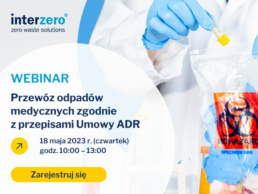
Participate in the training course - Carriage of medical waste in accordance with the provisions of the ADR Agreement
Participate in the training course - Carriage of medical waste in accordance with the provisions of the ADR Agreement
You are cordially invited to a webinar entitled. "Transport of medical waste in accordance with the provisions of the ADR Agreement", which will already take place on 18 May 2023 (Thursday).
The online training will be led by: Magdalena Gepert, Specialist in the transport of dangerous goods.
Scope of the webinar:
- classification of medical waste,
- medical waste as dangerous goods,
- preparation of medical waste for transport,
- legal requirements for medical waste packaging,
- appointment of a safety adviser for the transport of dangerous goods.
You can find the detailed scope of topics and the registration page under the link HERE
Registration for the webinar runs until: 18 May 2023 until 8:00 am.
You are welcome!
Are we getting into trouble? - new report on waste segregation from Interzero
Only 51% respondents to the survey, carried out by Opinia24 for Interzero, declare that they separate their waste into all 5 fractions, 43% believe that they do so correctly and the majority incorrectly interpret the meaning of the labels on the packaging. The report 'Packing for trouble? - What Poles know about packaging and how they deal with waste segregation' is now available.
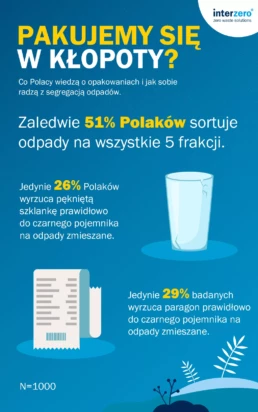
The separate collection of municipal waste in a minimum (i.e. 5-bin) system is an obligation for all of us and follows from the provisions of the law. How does this look in households? Nearly 90% of those surveyed separate their waste into glass, metals and plastics, minimally less for paper (84%) and only 62% bio-waste. 26% admit that they have a problem choosing the right container. The majority of respondents know how to deal with a glass bottle or a yoghurt container. While simple, mono-material containers do not raise questions, the situation is different for a broken glass (74% wrong answers), a beverage carton (49% wrong answers), a used paper towel or a receipt (53% and 71% wrong answers respectively).
A source of knowledge on how to deal with used packaging should be, among other things, its label, but although 90% of respondents read it, only 15% look for indications on how to throw it away. When shopping, Poles often check the ingredients, parameters and properties of products, but much less often do they pay attention to other symbols on the packaging. Respondents are most often interested in the best-before date (85%) and product composition (76%). Ecological aspects such as country of origin, certificates, instructions for handling the packaging or its recyclability are of interest to a significant minority.
Nearly 40% respondents believe that product packaging contains too much information, making it difficult for them to find what they are looking for. Polish consumers also have problems correctly identifying packaging symbols. Only 11% of respondents recognise the recycling mark, which appears in the Polish regulation on packaging labelling. Even fewer (8% of those surveyed) encountered the reusable and compostable packaging mark. Only two symbols are commonly known among consumers - the international recycling symbol - the Möbius Ribbon - and 'keep clean' - the so-called TidyMan.
The report "Packing for trouble? - What Poles know about packaging and how they deal with waste segregation" is available under this link.


Millions of fines for waste? Is it possible?

Millions of fines for waste? Is it possible?
Unfortunately yes. This is a way to tighten sanctions for not keeping records of waste or commissioning its transport to persons operating in the so-called shadow economy.
He April 7, Przemyslaw Kuna , Managing Director at Interzero, took part in the episode of the Adventures of Entrepreneurship podcast on waste management in the company.
Topics covered during the interview:
- What is ROP (Extended Producer Responsibility),
- What is BDO (Waste Database),
- What is the level of awareness among Polish entrepreneurs,
- What are the consequences of non-compliance with ROP rules,
- What do official controls look like and how to protect yourself against penalties,
- What is waste management and what is it for,
And what can be expected in the future in terms of waste and environmental protection.
We encourage you to watch the whole interview on the Adventures of Entrepreneurs channel HERE
Easter
Easter
On the occasion of the upcoming Easter holidays, we would like to extend our warmest wishes full of joy, health and prosperity.
We believe that this coming time will be an opportunity for you to rest, reflect and spend time with loved ones and friends. May the traditions and customs of Easter remind us of the values that are most important in life - love, family warmth and kindness!
The Interzero team
Innovative raw material management developed by Interzero
Innovative raw material management developed by Interzero
Sustainable development and closing the loop can be an opportunity for companies. ESG regulations are worth looking at not only in terms of potential costs for the company, but also measurable benefits, including profits and savings of natural resources.
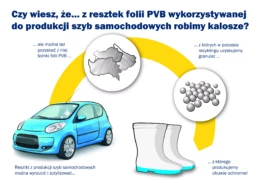
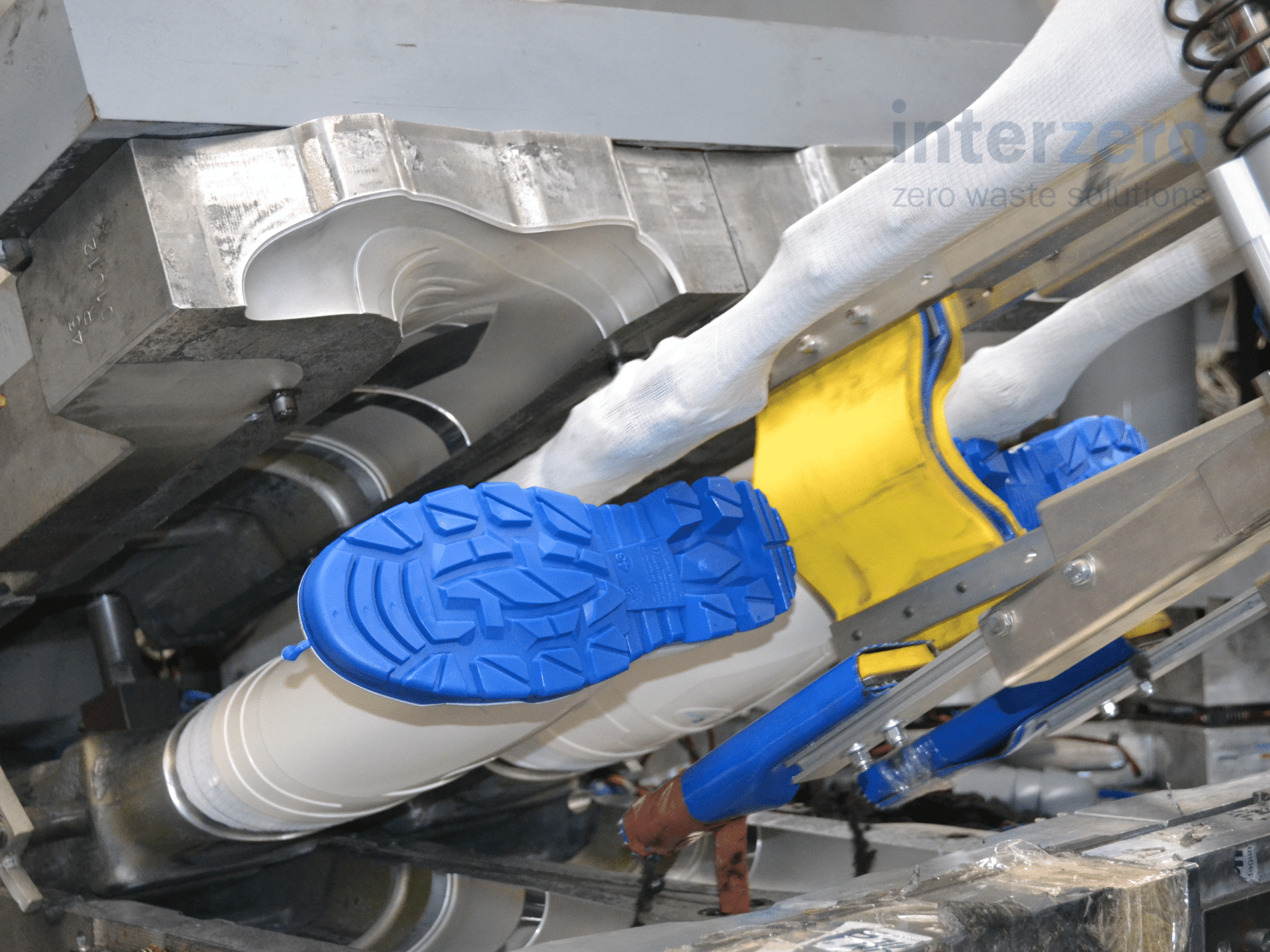
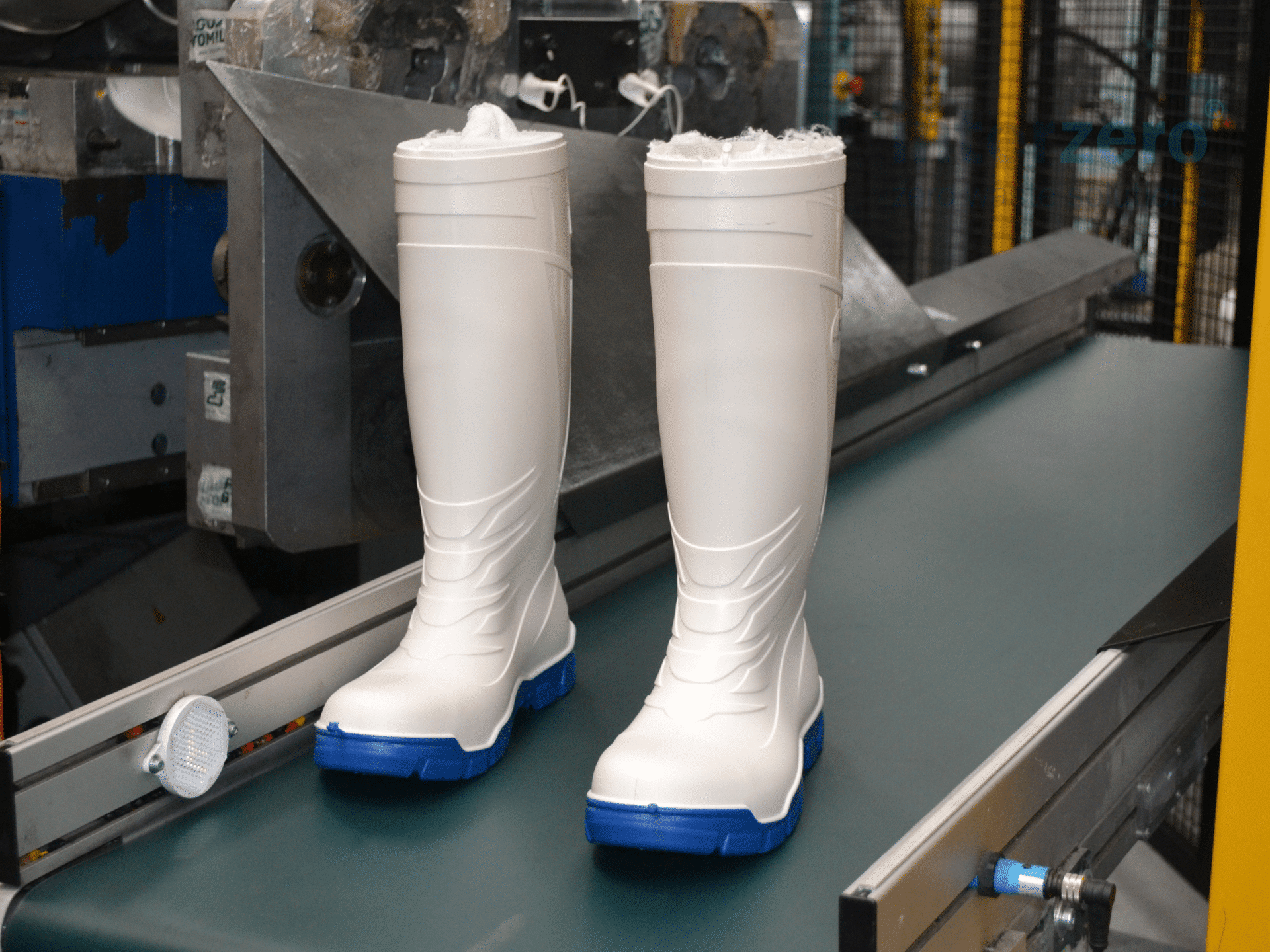
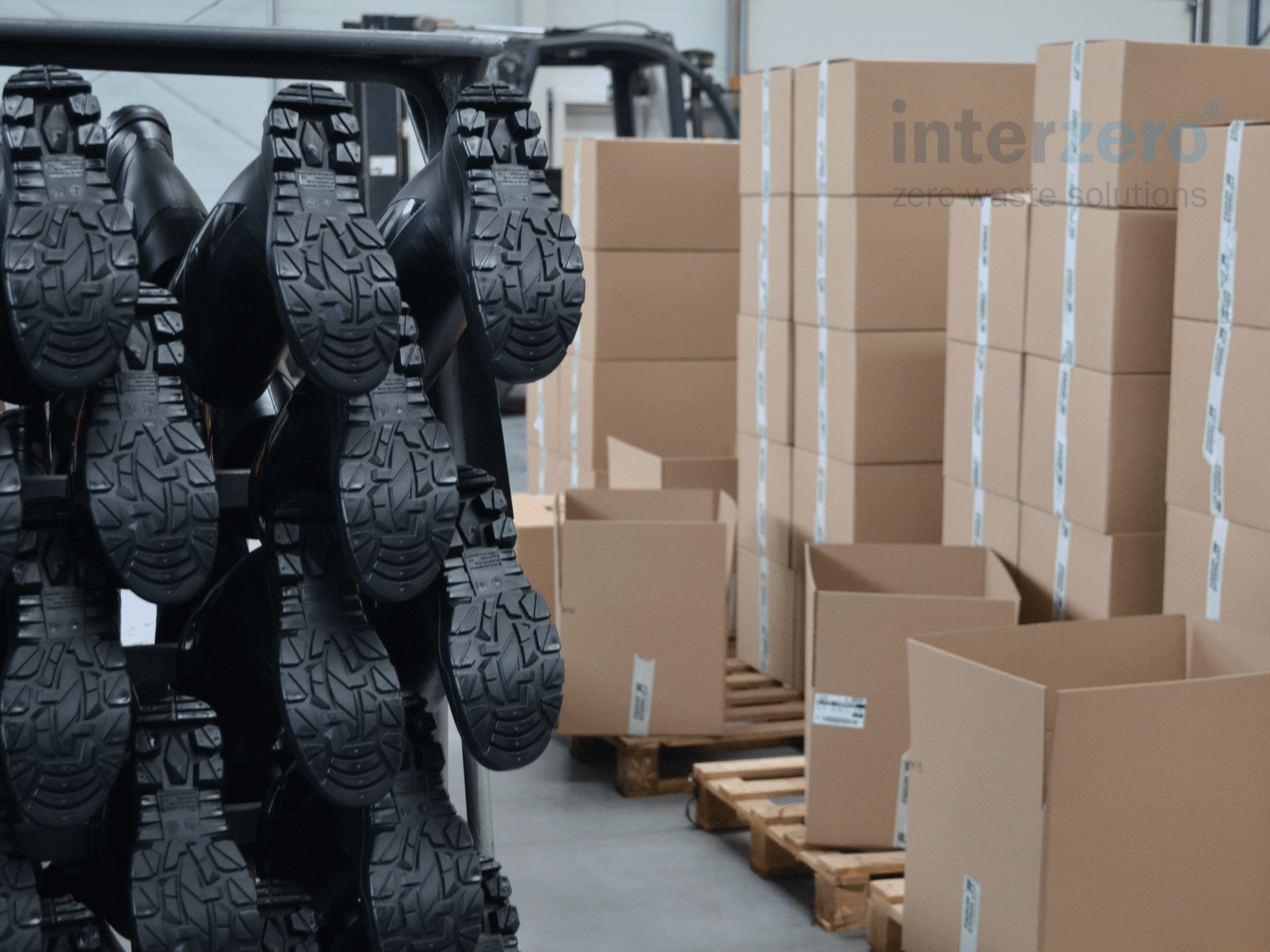
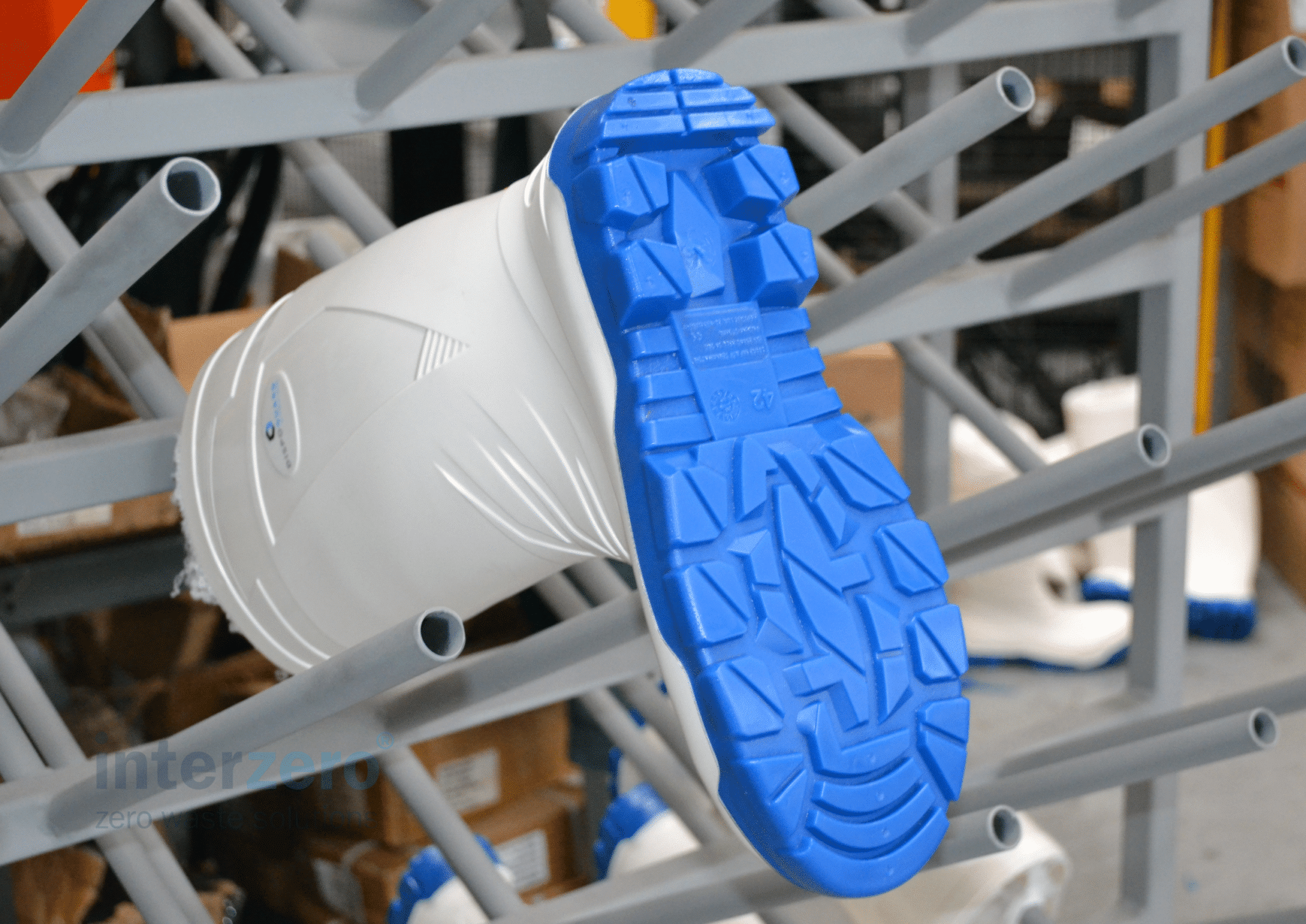
Knowing this, we started cooperation with Fagum-Stomil and thanks to our joint commitment, we managed to develop a way to use the leftovers of the PVB film used in the production of car windows for the production of rubber boots. Due to its composition, the film is very difficult to process, as it sticks together. After long tests, conducted since 2021 by Interzero and Łukpol , it was possible to develop a method for processing PVB scrap and its reuse for the production of shoe granules. In this way, the material previously perceived as a difficult raw material is recycled and reused.
The developed method gives measurable benefits for the environment - it reduces the amount of natural resources needed for production, reduces pollution and exploitation of the environment, and leads to mitigation of the climate crisis.
As an industry leader, we pursue the mission of supporting the circular economy by searching for innovative, integrated environmental solutions focused on the future. We hope that our many years of experience and acquired know-how will allow us to implement even more projects focused on environmental benefits in the near future.
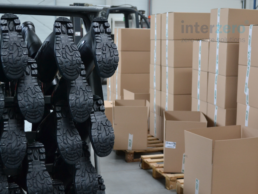
We encourage you to view the photos of the product.
We need to start working on bail
We need to start working on bail
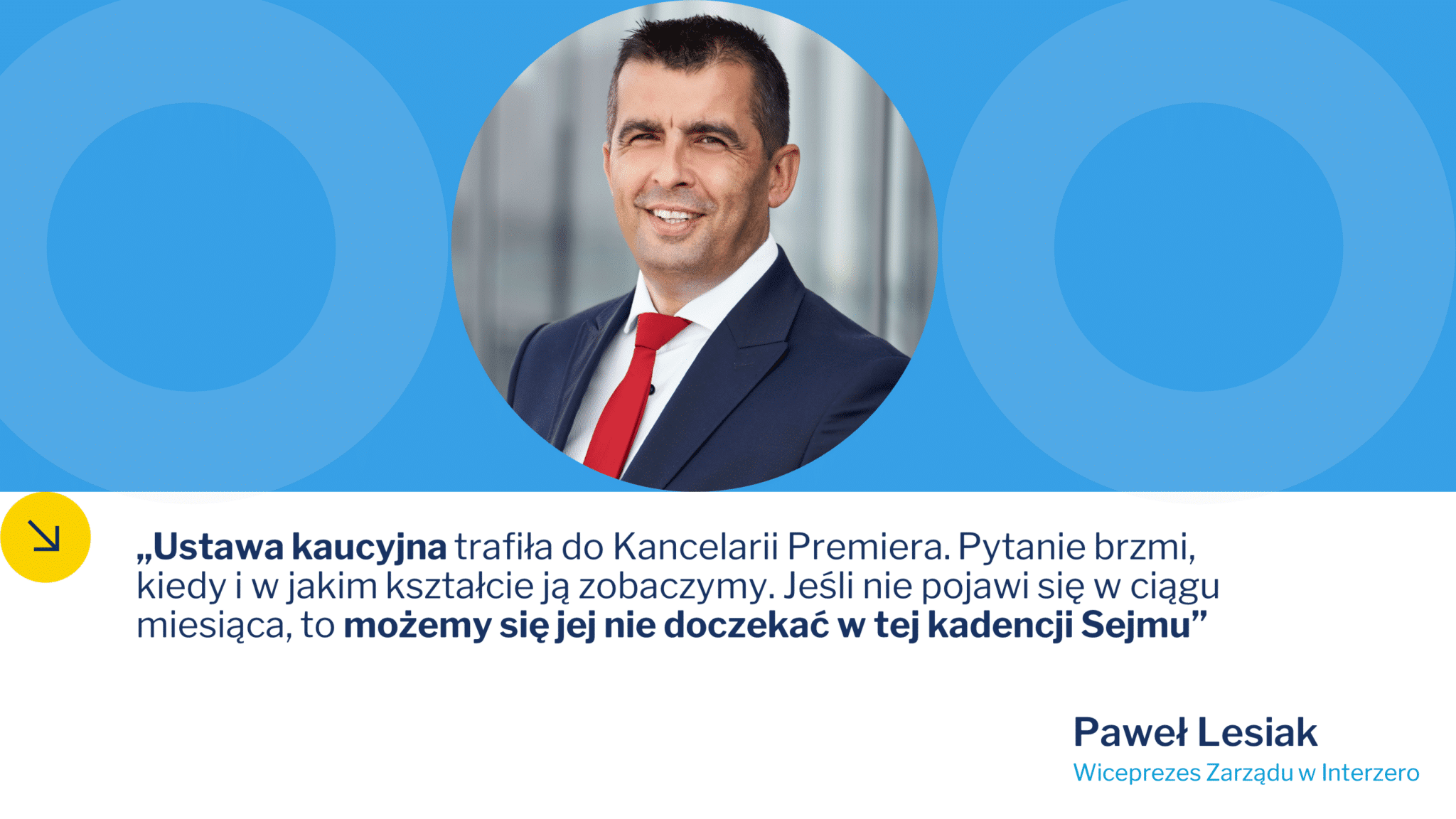
What will be the effects of delays in legislative work on the deposit-refund system? What about the excessive burning of packaging and what will the future of chemical recycling look like? These topics were raised in the latest debate "Packaging in the circular economy: from ideals to practice". for The Republic .
The meeting was attended by Renata Juszkiewicz, Anna Larsson, Robert Chciuk, Konrad Nowakowski, Jacek Wodzisławski, Andrzej Gantner, Łukasz Sosnowski and on behalf of Interzero Pawel Lesiak , Vice-President of the Management Board. The debate was moderated by Aleksandra Ptak-Iglewska.
As part of the meeting, the future of the European packaging market, the effectiveness of recycling in Poland and the topic of reusable packaging were discussed.
The participants, discussing the deposit-refund system, pointed out that, taking into account the PPWR criteria, including dairy product packaging is not entirely a good idea.
"I agree with the proposal not to include dairy product packaging in the system. However, this would be tantamount to failure to meet the collection obligation resulting from the ordinance. There is no good solution here. The EU regulations directly result in the obligation to include dairy product packaging in the system. A compromise solution would be to postpone the entry into force of the deposit obligation for this assortment. This would allow us to gather the first experience of the system's operation in other ranges of materials and prepare for it better." - said Pawel Lesiak.
The obligation to introduce the system to smaller stores also became the subject of disputes. Experts have noticed that small retail chains want to join the system, seeing financial benefits and the possibility of attracting customers.
"As Interzero, we run such a system in small stores in Germany. In our western neighbour, these smaller entities, despite the statutory exemption, willingly join it. It is business justified, because if the customer cannot return the bottles in a given store, they simply he will start shopping elsewhere. In Poland, we should think in a similar way, regardless of the discussion about regulations. I am in talks with retail chains, including small shops, and I hear that they are very interested in the system and want to join it, "said Paweł Lesiak.
Link to the entire debate HERE
How can business benefit from waste?
How can business benefit from waste?
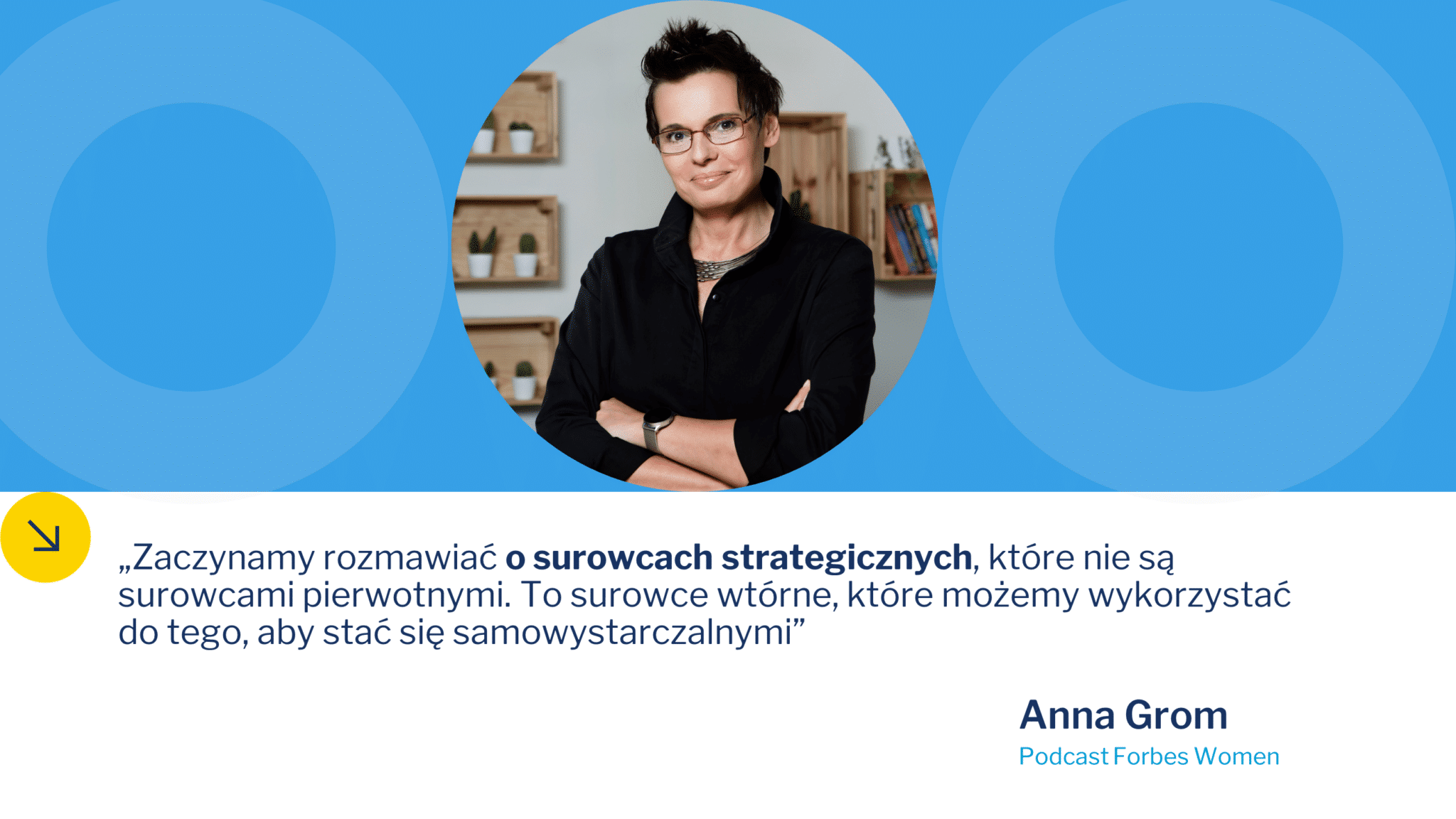
Anna Grom, President of the Management Board of Interzero, talked about innovative ecological solutions, an unstable legal situation and the implementation of the circular economy concept in the latest podcast for Forbes Women Polska.
Environmental protection should not be an abstract value, but a necessary condition for our continued existence. It is worth constantly analysing what is happening in our country and in the world in terms of sustainable development. A trend that can be noticed in terms of waste management is the fact that the young generation increasingly often stops paying attention to the brand and starts to notice the impact of a given company on the natural environment. Big players are also aware of the cost of raw materials used for production and strive to acquire raw materials for their own.
As an integrator of sustainable environmental solutions, Interzero analyses the needs of customers and together with them looks for solutions that can bring measurable financial and ecological results. We are already taking actions that allow us to close the circulation of raw materials - we advise companies on how to optimise processes, e.g. through sustainable packaging design, and we also implement circular economy concepts in existing and new business models.
We encourage you to listen to the entire podcast HERE