
EcoExperimentarium in Wroclaw - interactive environmental exhibition
EcoExperimentarium in Wroclaw - interactive environmental exhibition
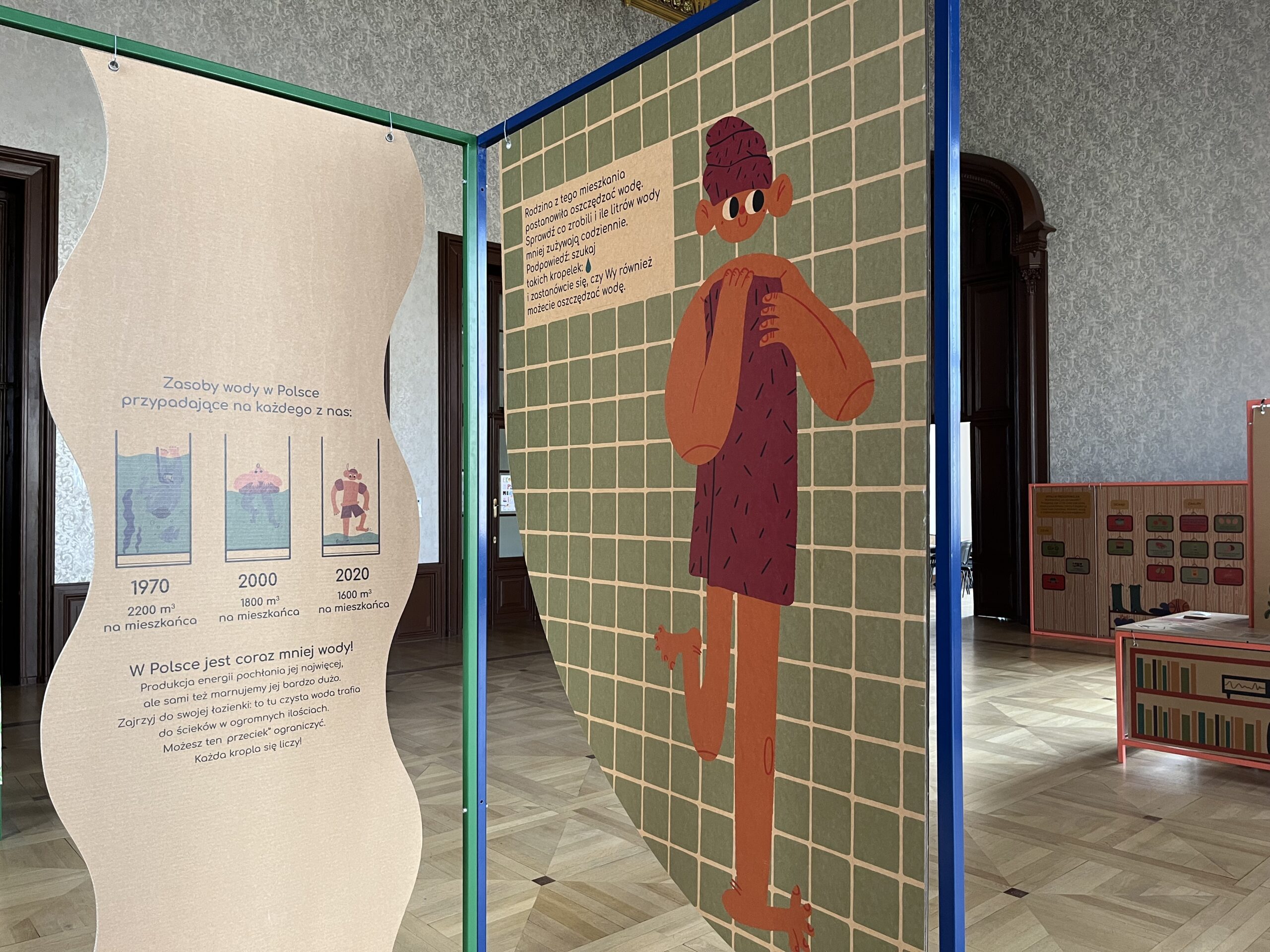
EcoExperimentarium is an interactive educational exhibition in Wrocław that aims to promote ecological habits in everyday life. Located in the Session Hall of the Wrocław Central Railway Station at 105 Marszałka Józefa Piłsudskiego Street, the exhibition is available free of charge from 27 March to 25 April 2025.
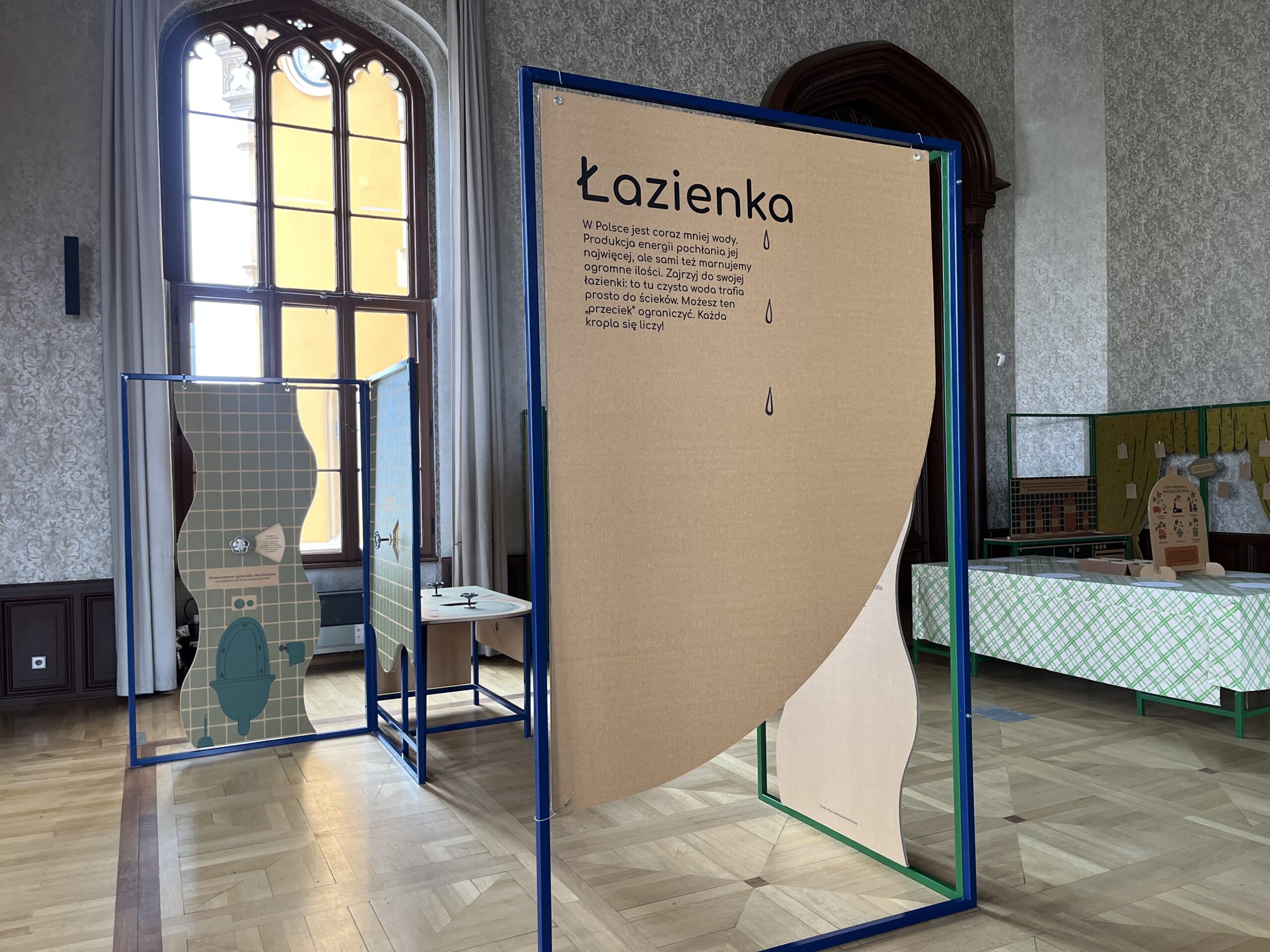
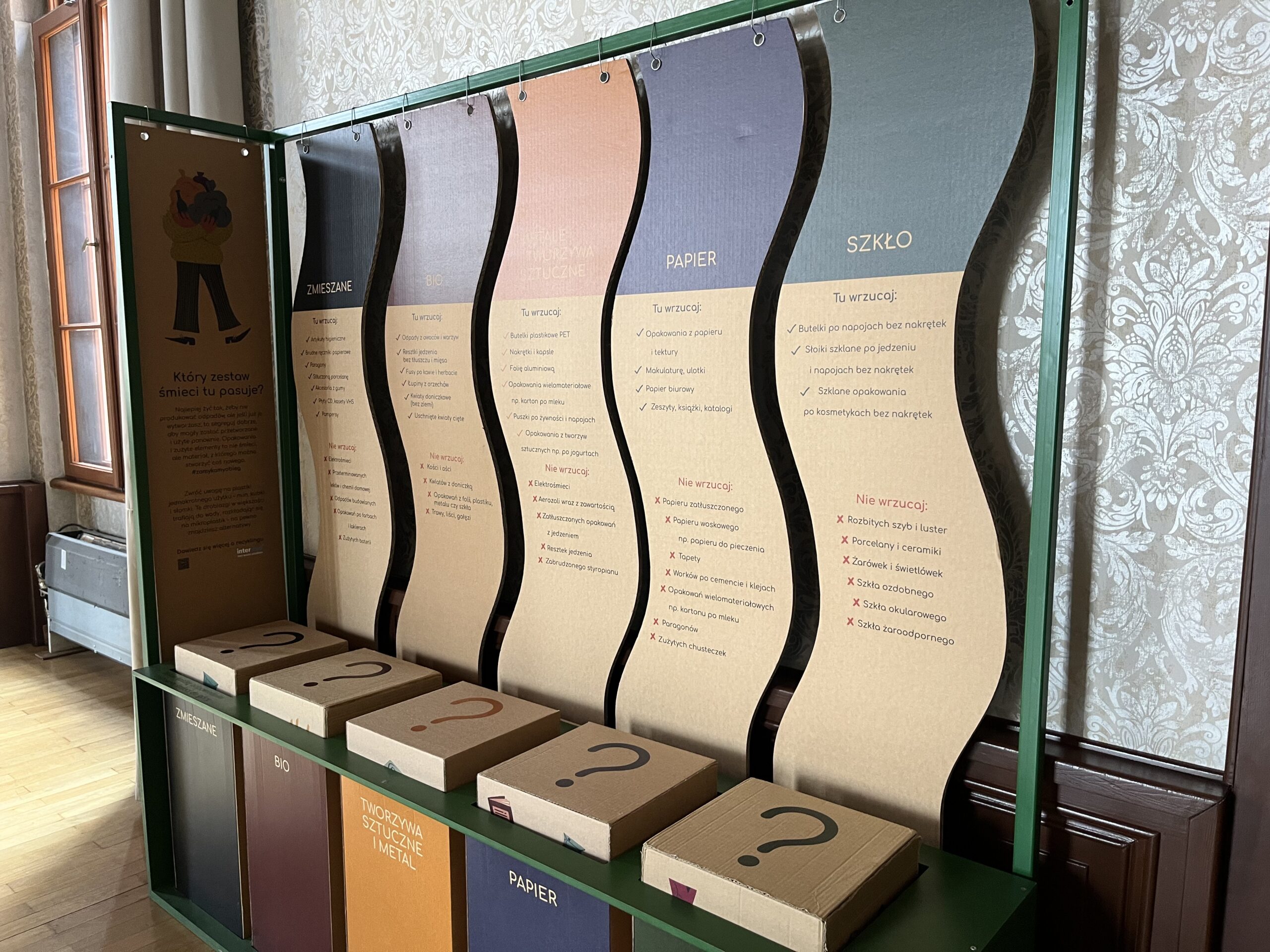
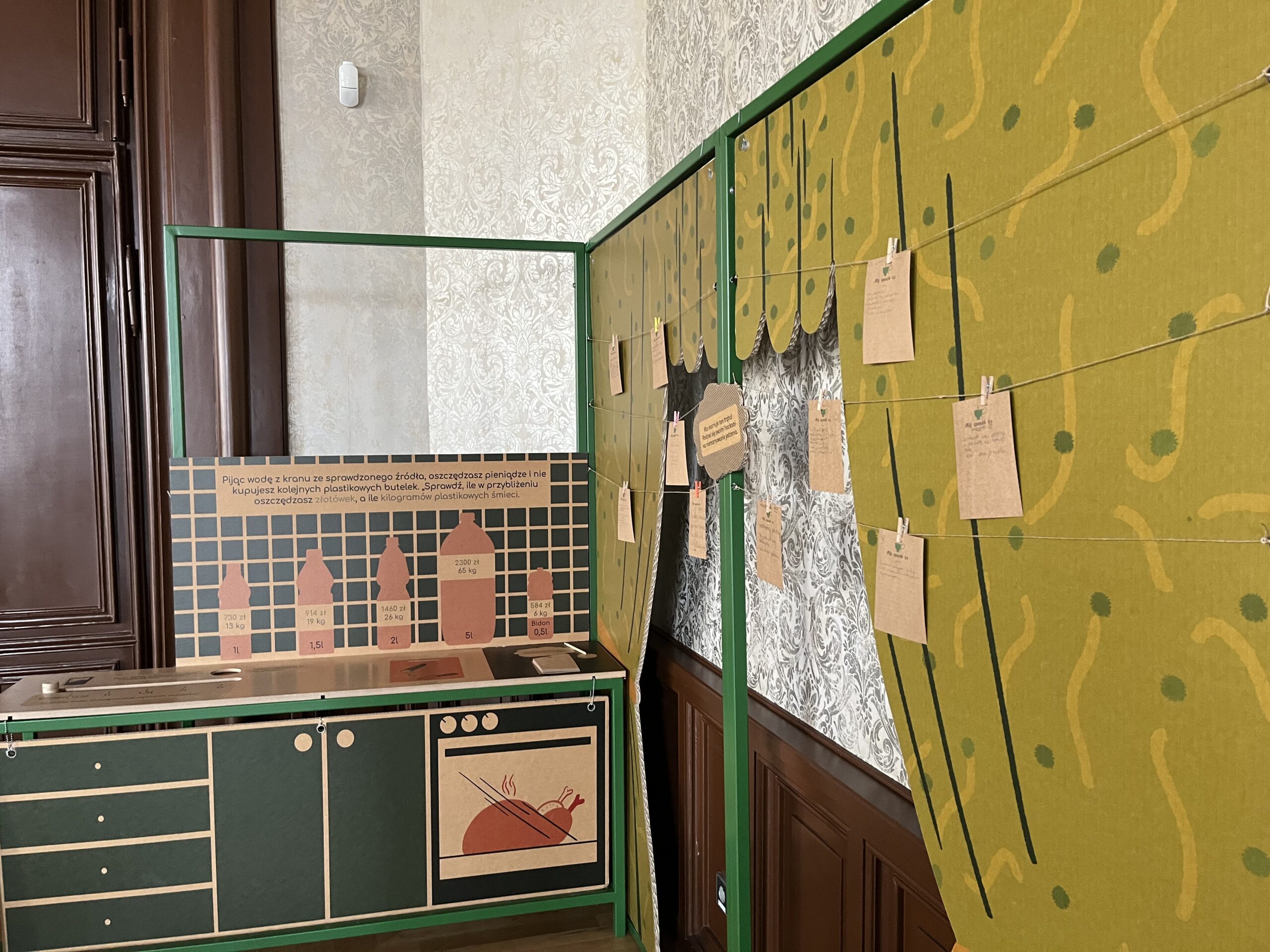
The exhibition is designed on the floor plan of a flat, where visitors can learn practical ways to save energy, water and reduce waste in individual rooms. For example, in the living room, methods for efficient energy use are presented, in the bathroom - ways to minimise water consumption, and in the kitchen - cooking techniques in the spirit of zero waste.
The exhibition is mainly aimed at organised groups such as kindergarten and primary school students, but is also open to families, young people and senior citizens. Visits for classes and organised groups take place from Monday to Friday from 9:00 to 14:00, and for individual visitors on Saturdays and Sundays from 12:00 to 17:00.
The organiser of the EcoExperimentarium is the Mamy Projekt Foundation and one of the main partners of the exhibition is the company Interzero.
By visiting the EcoExperimentarium, participants have the opportunity to experience how small changes in everyday habits can contribute to climate and environmental protection. It is a great opportunity to learn in a practical way how to take care of the planet while simplifying your life.
The EcoExperimentarium is a project that has so far been visited by more than 60,000 people w 13 cities in PolandThe city of Warsaw, Gdynia, Krakow, Poznań and Bielsko-Biała, among others. Now it is time for Wrocław! Fantastic educators from Ekolandia.edu, who are passionate about sharing their ecological knowledge, await you at the exhibition.
You are cordially invited to visit the exhibition!
Invitation to Webinar: 'New developments in environmental and waste regulations for 2025'.
Invitation to Webinar: 'New developments in environmental and waste regulations for 2025'.
You are cordially invited to the Interzero webinar, which will take place 10 April 2025. The event will focus on the latest changes in environmental regulation and the ongoing work on Extended Producer Responsibility (ROP). This is an excellent opportunity to learn more about the upcoming changes and their impact on businesses and the environment.
Why take part?
In the first part of the webinar, hosted by Pawel Sosnowski, the Board's Plenipotentiary for Environmental Regulation, will focus on ROP-related work. According to the latest information, the Extended Producer Responsibility Act will be adopted as early as 2025. Its first measures will take effect as early as 2026, with subsequent measures entering in stages. During the webinar, our expert will discuss:
- Draft assumptions of the ROP Bill presented by the Ministry of Climate and Environment.
- Advantages and disadvantages of the proposed solutions.
- Industry positions to the Ministry's proposal.
- The prospect of further work on a new ROP model.
In the second part of the webinar, we will focus on changes to waste law and changes to BDO. This part will be hosted by Wojciech Przybycin, Environmental Expert. Will be presented:
- Changes to construction waste legislation effective from January 2025.
- New separate collection obligation for textile waste.
- Amendments to the Regulation on types and quantities of waste for which no waste records are required.
- BDO changes effective from January 2025.
- Significant changes regarding stamp duty.
How to register?
To participate in the webinar, please complete the registration form available at.
Once you have registered, you will receive a confirmation and a link to the broadcast. You are welcome to join!
When the lights go out... on 22 March at 8.30pm. celebrate Earth Hour
When the lights go out... on 22 March at 8.30pm. celebrate Earth Hour
We are about to celebrate the 19th edition of WWF's Earth Hour, the world's largest grassroots environmental movement and a global event involving tens of millions of people and hundreds of cities every year. Poland will participate for the 18th time.
On 22 March 2025 at 8.30 p.m., turn out the lights for Earth Hour
WWF campaign promotes environmental protection - encourages reflection and a review of habits, but also offers hope for a better tomorrow. The symbolic gesture of turning off the lights for 1 hour a year is an expression of concern for the future of our planet.
It is worth remembering that Earth Hour is more than a brief, fleeting moment when cities are plunged into darkness. It is an initiative and a movement that continues to inspire and mobilise people around the world, reminding us of our collective responsibility for the state of the planet and the real impact we can have on its future appearance.
As in previous years, this year also participate in Earth Hour. Our idea of a world without waste and our main objectives of preventing waste and conserving resources are in line with the slogans proclaimed by the initiators of the campaign. As leaders of sustainable development in Poland and throughout Europe, we feel a special responsibility for the fate of our planet. We strive every day to create awareness, educate and inspire action for a more sustainable future. We also encourage our employees, customers and business partners to do the same.
How to join Earth Hour? On Saturday 22 March at 8.30pm your local time, turn off the lights in your home, office or wherever you are. That's all there is to it and that's all there is to it.
Earth Hour 2025 in Poland under the slogan We want to feel safe
This year's Earth Hour in Poland is dedicated to the need to protect biodiversity. In the opinion of WWF Poland, biodiversity is, next to climate change, one of the most important environmental issues.
As part of the Polish edition of Earth Hour signatures are also being collected on a petition to the Prime Minister of the Republic of Poland on the establishment of an EU Natural Resources Restoration Fund. In it, activists demand action on:
- healthy, sustainable ecosystems that provide protection from extreme weather events,
- ensuring people's health security (physical and mental),
- healthy and resilient agriculture,
- the development of ecotourism,
- creating sustainable jobs in areas where environmental degradation has occurred.
As reported by the initiators of Earth Hour, 2024 was the hottest year in the history of our planet and also ended the hottest decade ever measured. The temperature of the seas had never been so high, and gigantic fires, devastating storms and severe droughts caused enormous damage not only to humans, but also to nature. All these phenomena indicate that we are inevitably approaching so-called tipping points, beyond which we will no longer be able to save our planet and we will irretrievably lose unique ecosystems. Environmentalists therefore encourage us to take action now to ensure that we, the people of the Earth, are climate-secure for years to come.
Earth's greatest hour - donate an hour to the Earth by doing what you love
The goal of Earth Hour 2025 is to Breaking last year's record of 1.5 million hours "donated" to the Earth by event participants. WWF encourages people to share their commitment to the planet by dedicating one hour to either play or act in support of the planet. The organisation presents a range of proposals for local and global activities and encourages you to join them right now on 22 March at 20.30 local time.
For a full list of activities and more information about the campaign, see on the Earth Hour website.
What is Earth Hour? Origins and reasons for popularity
Earth Hour is an environmental campaign created by the World Wide Fund for Nature (WWF)whose final takes place at the end of March each year. Its symbol is the lights going out - a simple gesture with which the initiators and participants show their concern for the state of the Earth's environment and climate and emphasise their commitment to nature conservation. The overarching goal of WWF Earth Hour is to care for the Earth by promoting sustainability and respect for nature and the planet's natural resources.
Earth Hour was held for the first time in 2007 in SydneyThe campaign was launched in 2008, when as many as 2.2 million people took part. In subsequent years, the action gained publicity and gradually spread to other countries of the world. Poland joined Earth Hour in 2008. - At that time, already 50 million people worldwide declared their participation in the event. A year later, already 700 cities from 78 countries declared their participation, and in 2010. Earth Hour was hailed as the biggest environmental action in the history of the world.
Over the past 19 editions, Earth Hour has enjoyed steadily increasing popularity - for one hour a year, the lights have been switched off not only at the Sydney Opera House, but also at the Eiffel Tower, the Colosseum, Buckingham Palace, the Golden Gate Bridge, St Mary's Church in Krakow and the Empire State Building.
Is Earth Hour worth celebrating?
As the name suggests, the Hour for only lasts an hour and the the associated reduction in energy consumption is significant. Action also has no impact on emissions related to energy production, which is one of the main causes of climate change.
It should be emphasised, however, that it is not just energy consumption that is at stake here - the festivities are symbolic, with cities plunged into darkness to reflect on climate change and the action we can take to slow it down. With a clear action that everyone can see, such as turning off the lights on a March evening, the action also has the potential to reach an increasingly new audience.
Recycling is a duty, not a choice! Trends for World Recycling Day 2025
Recycling is a duty, not a choice! Trends for World Recycling Day 2025
18 March is World Recycling Day, an opportunity to reflect on the benefits we derive from returning materials to circulation. For businesses, meanwhile, it is an ideal time to look at the environmental impact of the products and waste they produce and to take action to reduce resource waste.
What is recycling?
According to the statutory definition, recycling is the recovery by which the waste is reprocessed into products, materials or substances used for the original purpose or other purposes[1]. Its aim is to minimise the use of primary raw materials in favour of reusing materials that have already been put into circulation.
[1] Act of 14 December 2012 on waste (Journal of Laws 2013, item 21)
Recycling as a legal obligation for businesses
As a result of Polish and EU regulations, it is now the responsibility of many businesses to send their waste for recycling.
- Introducers of packaged products, tyres, lubricants and electrical and electronic equipment have an obligation to ensure recycling of waste produced from the products and packaging they introduced.
- From 2025, PET beverage bottles up to 3 litres must contain min. 25% of recycled plastic. This will increase to 30% from 2030.
- Under the PPWR, by 31 December 2025. at least 65% of packaging waste must be recycled. After 5 years, this share will increase to 70%.
- All packaging placed on the EU market must be recyclable (i.e. they must be designed with recycling in mind and recycled on a large scale).
- From 2030, plastic packaging will have to contain a certain amount of recyclate (depending on the packaging material).
Waste recycling is a necessity, not a temporary trend
Pressure regarding the recyclability of products and packaging is not only put on businesses by regulations, but also by consumers. The European Consumer Packaging Perceptions study 2025 conducted by Pro Carton shows that recyclability of packaging is the most important attribute respondents pay attention to when making their daily choices.
On Recycling Day, we are particularly pleased that as many as 84% of those surveyed are aware of which types of packaging materials are recyclable and which are not necessarily. As many as 65% consumers taking part in the survey specifically identified recyclability, as well as resealability and the use of renewable raw materials, as among the key features of any packaging. Furthermore, as many as four out of ten consumers indicated that they had refrained from choosing a product from a particular brand because of various concerns about its environmental impact, and 54% of them put a product back on the shelf whose packaging was not recyclable!
It follows that placing an emphasis on the recyclability of packaging and products can give businesses a huge competitive advantage and build a favourable image of their company in the eyes of consumers. This is all the more important as it is in recycling that as many as 67% consumers see a remedy for climate change.
What do consumers expect from producers? Recycling Day statistics
62% respondents indicated that they had increased the amount of waste they recycled in the last 12 months. We can therefore see that Consumers are making an effort to take stronger care of the environment. They also expect the same from businesses, or more specifically, from the manufacturers.
- 62% of those surveyed wish manufacturers would use more renewable materials.
- 52% Respondents would prefer manufacturers to produce only easily recyclable packaging.
- 38% consumers want clear segregation instructions on packaging.
- 37%, on the other hand, would see room to set up deposit systems for hard-to-recycle materials[1].
[1] Pro Carton, European Consumer Packaging Percertion Study 2025, https://issuu.com/procarton/docs/european_consumer_packaging_perceptions_study_2025.
Recycling for the benefit of the planet and the viability of the company
As environmental consultants, we want to emphasise that placing an emphasis on recycling not only allows you to increase revenue, but also to reduce the company's waste management costs. More and more companies are recognising that effective waste management helps to reduce the frequency and cost of waste collection and helps to generate additional revenue from the sale of either raw materials or recycling documents (DPR, EDPR).
World Recycling Day is the perfect time to take action to better manage your company's waste. If you want to optimise your waste management processes and reduce your environmental impact, contact us - we will help you make changes that will increase the competitiveness and profitability of your business!
Recycling at Interzero - check out what we can do for your business!
At Interzero, we support entrepreneurs in their efforts to turn back raw materials and close material cycles. We are well aware that this recycling is one of the pillars of GOZ, which is why we offer our customers, among other things:
- assumption of recovery and recycling obligations for packaging, tyres, batteries and accumulators, oils and lubricants, vehicles and WEEE. This not only benefits the environment, but also the company budget. see how much you will save by handing over your duty to us!
- implementation of public education campaigns, in which we show how to handle waste to maximise its chances of being recycled,
- modern industrial composterswhich accelerate the recycling of biowaste,
- unique Recycled-Resource plastics recycling processresulting in the production of high-quality regranulate in accordance with customer specifications.
The most important research work on plastics recycling technology takes place in the newly opened Interzero Plastics Innovations doo laboratory in the Lenart industrial zone in Maribor in Slovenia. Thanks to him we can supply our customers with the highest quality recycled plasticswhich can successfully replace virgin raw materials.
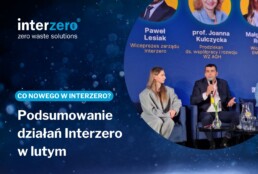
What's new at Interzero? Check out the February summary
How was February at Interzero? Read a summary of the month
The past month was full of important events and initiatives at Interzero. As part of the educational campaign Eco-friendly without the frills we published the third part of the report 'In the traps of disposability', which analysed Poles' attitudes to reusable packaging. We also took an active part in Sustainable Industry Lab 2025, where we were particularly interested in the presentation of the Waste Platform 2.0, which makes it easier for businesses to meet their environmental obligations. Check out what's new at Interzero below!
EcoPak - we're not slowing down
February saw the end of the pilot edition of our flagship educational programme EcoPak. 100 classrooms from Warsaw and the surrounding area received boxes filled with materials to help teachers conduct interesting and engaging paper-related lessons. Pupils learnt how paper is produced, how often it accompanies us in everyday life, the importance of its proper segregation and whether it is possible to recycle it. At the same time, they exercised their manual skills and creativity. During the activities, they built a cardboard forest, carried out an investigation in their school about the use of paper, created posters, collages and many other beautiful works. Also this month, we completed the recruitment for the second edition of the EcoPak on bio-waste. This time up to 200 packs will be distributed to schools. We encourage you to follow our pages and social media profiles.
Reusable vs. disposable - how do Poles perceive takeaway packaging?
The past month has brought important findings on the future of reusable packaging. Our new report looks at how Poles perceive alternatives to single-use plastic, which under the SUP directive has had to have a reusable option since last July. This is the third instalment of the series 'In the traps of disposability', in which Interzero analyses the implications of the SUP (Single-Use Plastics) directive for everyday consumer decisions. This time, the experts focused on takeaway food habits and examined what characteristics Poles think the ideal reusable packaging should have. The entire report is available to download on the Eco Without Borders website.

Interzero at Sustainable Industry Lab 2025
Our experts shared their knowledge on technological solutions to support sustainability and how to manage waste effectively. Speakers included: Paweł Lesiak Vice President, Łukasz Czarnowski Digital Sales Cross Country Function Head and Robert Kowal Business Development Manager. Discussions included: digital challenges in waste management, the role of IT tools in ESG reporting, the importance of reliable data in ESG strategy - how its analysis helps reduce emissions and build transparency in companies' operations, growing consumer awareness - why education and innovative approaches to sustainability are so important for the future of business. You can read more about the speeches on our fanpage.
Selling to Spain? Remember your EPR obligations!
If you export your products to the Spanish market, you must comply with the Extended Producer Responsibility (EPR) requirements. The Spanish regulations cover both local companies and foreign entrepreneurs placing on the market: packaged products (domestic, commercial, industrial), electrical and electronic equipment (EEE), batteries, accumulators and appliances containing them. Companies outside Spain must appoint an authorised representative to handle the formalities on their behalf. With Interzero it's easy! Simply sign the contract and we will take over your EPR responsibilities. We will provide full support in the registration, reporting and ongoing implementation of your environmental obligations, regardless of the scale of your business.
Interzero 2025 Environmental Conference - book your date!
The 2025 Environment Conference is getting closer! Already 3-4 June we are meeting at the Warszawianka Hotel near Serock to discuss together the most important legal changes in the field of environmental protection. This is an event not to miss if you want to keep up to date with SUP, ROP, PPWR and ESG regulations. There is a discount of -15% on the regular price during March, so it's the perfect time to register! Agenda for the event is almost ready. See you in June!

Are you selling your products on the Slovenian or Croatian market? Take part in a free webinar in English
Are you selling your products on the Slovenian or Croatian market? Take part in a free webinar in English
If you are a company based outside Slovenia or Croatia, but sell your products to end consumers in these markets, you are subject to a number of environmental obligations. For valuable information and to avoid potential penalties, we invite you to participate in our free webinar on Thursday 20 March.
Know your responsibilities for the EPR
Webinar Do you sell your products on the Slovenian or Croatian market? Get to know your EPR obligations
in English will be held on Thursday 20 March from 10:00.
Our speakers, both environmental consultants, Katariina Jerbić z Croatiaas well as Matej Marka from Slovenia, will present environmental obligations, focusing mainly on Extended Producer Responsibility (EPR) in Slovenia and Croatia.
Join our session and learn about the following topics:
- Environmental obligations in Slovenian and Croatian law - an introduction
- Explanation of extended producer responsibility (EPR)
- Mandatory waste streams in Slovenia and Croatia
- Licensing obligations for e-commerce retailers and manufacturers
- Who is required to have an authorised representative in Croatia and Slovenia
- Reporting
- Best practice and support for companies
- Question and answer session
The complexity and volume of environmental responsibilities can be stressful if you do not have a reliable partner by your side. Therefore, we encourage you to take advantage of this free opportunity to expand your knowledge with our specialists.
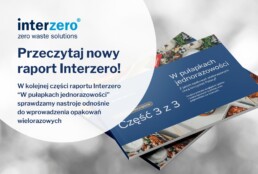
Are Poles ready for a world without disposables?
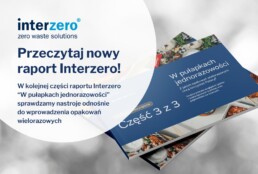
Are Poles ready for a world without disposables?
Airtight, lightweight and... a discount for using them? This is how Poles imagine the ideal reusable packaging, according to the latest Interzero report "Breakfast on the unstyrofoam".. This is the third and final part of the series "In the traps of disposability", which focused on consumer attitudes towards reusable packaging.
We wrote more about the report carried out as part of the Eco without corners campaign in the article The SUP Directive, or a half-whistle revolution and 'Waiting for bail' - what Poles know about the bail system... and what they don't know
In an era of growing environmental awareness, more and more companies and consumers are looking for ways to reduce single-use plastic. However, the reality is sometimes more complicated than it might seem. Published by In the pitfalls of disposability' (Part 3) prepared by Interzero sheds light on the key challenges in the transition to more sustainable packaging. In this report, we look at why, despite good intentions and increasing regulation, it is still difficult to completely eliminate single-use products, and what solutions can help combat excessive waste production.
Ecology versus convenience - which do consumers choose?
The research shows that although environmental awareness is growing, for many of us convenience still wins out over environmental concerns. One challenge highlighted by respondents is the issue of packaging for popular takeaway meals such as pizza, burgers and fries. For many, the idea of using reusable containers for fast food seems impractical - "I order pizza to avoid cooking and washing up, not to still clean the container afterwards," says one respondent.
What does your favourite packaging look like?
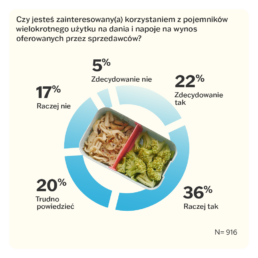
More than 58% Poles expect reusable packaging to be, above all, leak-proof, easy to clean and lightweight. Interestingly, the possibility of getting a discount or gratification for using them is also a key factor for many.
The report also shows that Poles are rather reluctant to use shared models - most prefer to have their own containers instead of renting them from restaurants on a deposit basis. They fear the mess, the need to store different containers and the additional duties involved in returning them.
Why read the report?
Report "Breakfast on the unstyrofoam". is not just about numbers - it is, above all consumer voices, their opinions and real concerns. The data collected can be a valuable source of knowledge for HoReCa, e-commerce or packaging manufacturers who want to better align their products with market expectations.
Read all parts of the report!
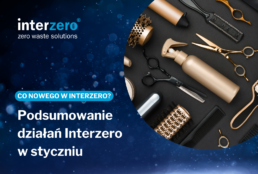
What happened in January? Read Interzero's summary of the last month
What happened in January? Read Interzero's summary of the last month
Nhe year began with enthusiasm and full commitment - we organised training, campaigns, educational workshops and we have launched a new service. Read on for a summary of January at the Interzero Group in Poland, where we outline the key events of recent weeks.
Further entities required to register with BDO
From 2025, the beauty industry is required to comply with new regulations on hazardous waste records. This major change, the obligation to register with BDO, will affect thousands of hairdressers, beauticians and other beauty industry service providers. We have launched a new form, which allows you to contact our company and take over the obligation to register with BDO.
New entry on the website translators to whom the new regulations apply, what penalties are available in the event of non-compliance and what waste is subject to registration with BDO.
New Interzero study: Businesses in the circular economy: a detailed analysis
Did you know that More than 70% companies want to implement sustainable initiatives? Closing the loop in the economy on a large scale is becoming a reality, as evidenced in thendings presented in Interzero's new study 'Businesses in the circular economy: a detailed analysis'. With data collected from high-level executives from six European countries (Italy, Austria, Poland, Slovenia, Croatia, Serbia). we can show that the adaptation of sustainable models in companies is a priority and brings numerous business benefits, including: reduced costs or increased innovation, as well as improved reputation. Our report presents the results of our sustainability trends survey, market expectations and related business decisions of medium and large companies in Europe.
"Waiting for the bail system" - the second part of the report "In the traps of disposability"
In January, the second part of Interzero's report 'In the traps of disposability' was published, entitled "Waiting for bail". This analysis of Poles' knowledge of the bail system shows, among other things, that:
- 23% of respondents had never heard of a bail system
- 41% are concerned that the turnaround points will be too far from their location
- 40% says you may need a receipt to get your deposit back
Even this cursory extraction from the data makes it possible to identify areas that need to be addressed with an appropriate information campaign to bring the way the bail system works closer to home.
The aim of the publication series 'In the Traps of Disposability', produced by Interzero on the basis of quantitative and qualitative research conducted by Opinia24, is to assess the impact of the Single Use Plastics (SUP) Directive coming into force. Speaking more extensively about this, she said on air Polish Radio Four Edyta Mantorska, Manager of the Interzero Environmental Education Team.

January webinar on changes to the bail system is over!
A webinar on the deposit system held on 16 January 2025, hosted by Pawel Sosnowski, Board Representative for Environmental Regulation at Interzero, provided participants with key information on the amendment of the Packaging and Packaging Waste Management Act.
The training discussed the details of the regulatory changes, including the postponement of the launch date for bail schemes, changes to covered drinks, new rules for collecting bail and the introduction of VAT on unclaimed bail.
A great value of the event was the rich Q&A session, which allowed participants to dispel numerous doubts and gain practical information on the new regulations. Thanks to the activity and commitment of the participants, the Q&A became a great opportunity to clarify any ambiguities and discuss problems that entrepreneurs may face.

Join us for a free webinar "Environmental obligations for companies selling to Poland - everything you need to know" in English, which will take place on 20 February 2025. The training will be led by Przemysław Kuna, Managing Director at Interzero.
4 nthese sections podcast "Eco without the corners"
Why are there differences between publicly available data on waste management? Why is it better to say plastics instead of plastic? What environmental topics did Poles live with in 2024 and what awaits us in 2025? These issues were discussed in the podcast 'Eko bez kantów'. We encourage you to listen to the latest episodes on the YouTube platform:
- "Waste and data - where do the discrepancies come from?" - Dr. Beata Waszczyłko-Miłkowska, IOŚ-PIB
- "Waste management - what do the figures tell us?" - Dr. Beata Waszczyłko-Miłkowska, IOŚ-PIB
- "2024 in ecology. What awaits us in 2025?" - Editors: Jakub Pawłowski, Aleksander Jakub Paszyński, Jakub Wojajczyk and Szymon Majewski
- "Plastic - we need it, although we don't like to admit it" - Dr Anna Kozera-Szałkowska, PlasticsEurope Polska
Early Bird promotion: tickets for the 2025 Environment Conference cheaper only until the end of February
The next edition of the Interzero Environmental Conference will take place on 3-4 June at the Warszawianka Hotel near Serock! This is a unique event that will allow you to learn about the latest legal changes in environmental protection. Promotion early birds runs only until the end of February, so don't delay - share this message with others now! It is also a great opportunity to make new business contacts. For more information on the event, see here.

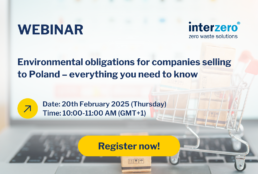
Invitation to Webinar: "Environmental obligations for companies selling to Poland - everything you need to know".
Invitation to Webinar: "Environmental obligations for companies selling to Poland - everything you need to know".
Does your company sell products to Poland? And do you know what environmental responsibilities this entails? Take part in a free webinar in English!
Why attend a webinar?
During the webinar we will discuss:
- Environmental obligations in Polish law - introduction
- Explanation of Extended Producer Responsibility (EPR)
- Licensing obligation for dealers and manufacturers
- The role of the authorised representative
- Good practices and support for companies
- Question and answer session
The meeting will be chaired by Przemyslaw Kuna, Managing Director of Interzero.
How to join a meeting?
To attend the webinar, simply register at HERE.
Registration is open until 20 February at 8am.
Trends in sustainability - what and how much are companies investing in? Survey report
Trends in sustainability - what and how much are companies investing in? Survey report
The transition to a circular economy is inevitable - these are the conclusions of the latest Interzero study Businesses in the circular economy: a detailed analysis. The green transformation of companies is not only enforced by legislation. It is also expected by customers, investors and financial institutions. The best way to set the right course for change is to work with an environmental consultancy.
Sustainability as a to be or not to be for most entrepreneurs
From the survey Businesses in the circular economy: a detailed analysis shows that a significant Most companies want to implement sustainable initiatives or have already started doing sos. Such declarations were made by 71.1 to 84.9% managers representing medium and large companies from 6 European countries.
Companies in the FMCG (81%) and electronics (82%) sectors stand out as the most active in this respect. For this group of companies, the implementation of circular solutions is no longer considered in the context of competitive advantage - the it becomes necessary in order to maintain its current position on the market.
The situation is slightly different for companies in the construction, retail and logistics sectors, where the drive to make the idea of a circular economy a reality is declared by just over 60% of respondents. From their perspective, making green changes stay ahead of the competition, create and control industry trends and gain the trust of new groups of customers and investors.
What budget do medium and large companies allocate to sustainability? In which activities do they most often invest? Download the survey report and discover the latest trends in sustainability!
Action versus reality: the state of implementation of Agenda 2030 in the medium and large enterprise sector
Despite the implementation of further sustainable initiatives, significant the majority of companies surveyed are still a long way from achieving the goals of Agenda 2030 - considered the 'easiest' non-financial reporting target to implement has only been achieved by 20.5% respondents, while the 'most difficult' carbon neutrality target has only 15.7% respondents on track.
This state of affairs, as it were, forces companies to seek advisory support. Researched companies were almost unanimous in their desire to use an environmental consulting firm and to entrust it with strategic, management and operational tasks.
In the eyes of management: reducing waste and increasing efficiency by implementing sustainable solutions
Managers of large and medium-sized companies declared that the introduction of sustainable measures can benefit their companies in the following ways:
- reducing the amount of waste generated (and consequently reducing waste management costs),
- increase the efficiency of the company's operations,
- to meet the growing expectations of customers, financial institutions and investors,
- adapting to prevailing industry trends.
However, the authors of the padding emphasise that for real benefits to be realised, it is necessary to implement changes based on concrete data and measurements. Otherwise, companies risk misdirecting investments. Assessing the environmental performance of products, services and the organisation as a whole was declared by only 35.5% of the companies surveyed. Some of the companies surveyed stated that they did not have any useful data or research to create a strategy for their organisation's sustainability efforts.
These figures clearly indicate not only the need for research and development work, but also the need for ongoing cooperation with a consulting entity like Interzero as an experienced partner specialising in sustainability.
What support are entrepreneurs looking for? Criteria for selecting an environmental consultancy
Given the huge impact of sustainability activities on the perception of a company by all its stakeholders, companies seeking advisory support are guided by a number of concretised criteria.
- One of the most common criteria is the possibility of adapting the services offered to the specific nature of the business. Many entrepreneurs have experienced the difficulty or even impossibility of implementing off-the-shelf, unmodified solutions into their business models.
- Equally important is wide range consulting firm. Respondents particularly value availability of comprehensive, integrated environmental services and the opportunity to receive advice in other areas, not necessarily related to sustainability.
- A key criterion is also good reputation of the environmental consultancy.
As environmental consultants, we understand these expectations of entrepreneurs very well. At Interzero, we have been developing customised, integrated services for over 30 years in the field of environmental protection for companies of all sizes and from all sectors. We offer comprehensive environmental consultancy, training, audits, and we provide tailor-made solutions for sustainability, recycling, waste management and waste machinery. We support businesses in meeting their legal environmental obligations and in the implementation of a circular economy. We are already trusted by more than 9,500 entities - find out more about our environmental services and join the customers with whom we are pursuing a shared vision of a world without waste.
About the Interzero study
Six countries were analysed: Italy, Austria, Poland, Slovenia, Croatia and Serbia. The objectives of the study were: to understand and analyse market trends in sustainability and the circular economy, to explore potential barriers to the implementation of sustainable practices, to examine the main sustainability needs in the medium and large enterprise sector, to analyse the readiness of these enterprises to move towards more sustainable business models.
The data analysed in the course of the study came from company press releases, newspaper and magazine articles and sustainability reports, as well as from interviews conducted with top executives representing the companies under study