
Deposit system for reusable packaging? It's possible with the Made4Loop service from Interzero!
Deposit system for reusable packaging? It's possible with the Made4Loop service from Interzero!
The introduction of the Act of 14 April 2023 amending the regulations on the management of certain waste and the product fee has the effect of significantly restricting the circulation of single-use plastic products. This amendment is a consequence of the implementation of the European Union Directive of 5 June 2019, referred to as the SUP Directive.
From 1 July 2024, businesses selling drinks in disposable cups will have to provide their customers with alternative packaging that is more environmentally friendly and helps to reduce plastic waste. This is why Interzero is introducing a new service - Made 4 Loop.
Looping is a unique solution to implement sustainable, reusable and eco-friendly alternatives to disposable cups and food packaging in your business. The Made4Loop model developed by Interzero involves the use of reusable cups and packaging, which customers rent against a deposit and then return through a deposit system. In this way, the packaging remains in a closed loop and is reused dozens, if not hundreds of times.
Get a seamless implementation of your legal obligations. Create with us a customised design for mugs and boxes to match your company's offering. Reduce your carbon footprint and waste management costs!
You can read more about our new service HERE
What is the future of waste management shaping up to be? Are we drowning in a waste tsunami?
What is the future of waste management shaping up to be? Are we drowning in a waste tsunami?
What is certain is that the future of waste management will be shaped by a number of factors, including technological change, changes in consumer culture, regulatory rules and increased environmental awareness.
The zero-waste economy is not only a vision of the future, but above all an environmental concept based on innovative ecological and economic solutions. This philosophy is closely linked to the idea of a closed loop economy. Its implementation requires the transformation of the entire production process and the development of a waste management system based on comprehensive education. Action is needed in many areas, such as reducing the amount of waste generated, promoting conscious consumption and increasing the recovery and recycling of raw materials.
Required recycling levels are already increasing. Selected single-use plastic products are disappearing from the European market. According to the plan, recyclate will be mandatory for certain packaging. All due to European regulations. This new circular economy architecture is still missing one important component, which is Extended Producer Responsibility.
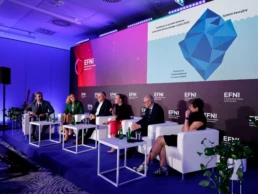
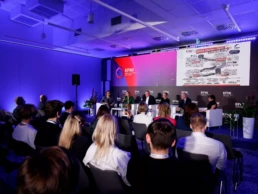
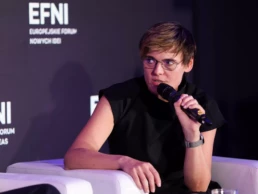
How not to drown in the tangle of new legislation prepared by Polish and EU specialists was discussed at the panel "The waste tsunami, how not to drown in packaging".which took place on 12 October during the European Forum for New Ideas (EFNI). Panellists included:
– Anna Grom, CEO, Interzero Polska and Interzero Circular Solutions Europe
– Dr Katarzyna Baranska, head of the decarbonisation team, partner at law firm Osborne Clarke
– Joanna Leoniewska-Gogola, MBA, deputy director for sustainability and economics, Deloitte
– Piotr Romańczuk, Director of Environmental Affairs, Maspex Group
– Robert Szyman, Director General, Polish Plastics Converters Association
European Forum for New Ideas is one of the largest conferences dedicated to global trends, new ideas and the future of Europe. As Interzero, we strive to continually discuss the challenges in a changing world with business representatives and together shape a future that depends on us.
Thank you to the organisers for the invitation and to the panellists for the inspiring discussion. See you at EFNI 2023!
Recycling instead of wasting resources: hard evidence of contribution to sustainable business
Recycling instead of wasting resources: hard evidence of contribution to sustainable business
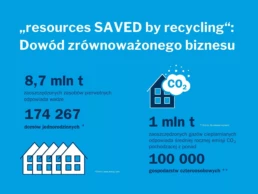
We are publishing the study "RESOURCES SAVED by recycling". (resources SAVED by recycling) for 2022, in which we prove that Interzero and our customers are reducing greenhouse gas emissions by around 1 million tonnes and primary resource consumption by 8.7 million tonnes.
The consequences of global warming are becoming clearer by the week, and policy makers, researchers and entrepreneurs are discussing the right kinds of climate action. What can and should be done to achieve the climate goals we have set? At the same time, how can we ensure a sustainably high standard of living and a successful economy in Germany and Europe? One answer to this question is the systematic recycling of materials. The circular economy has already become a key factor in climate change mitigation.
This is clearly demonstrated by the work of Europe's leading closed-loop service provider, Interzero. As the study 'Resources SAVED through recycling' published today shows, in 2022 the company and Interzero's customers returned a total of 2.1 million tonnes of materials to circulation. This prevented around 1 million tonnes of greenhouse gases. At the same time, around 8.7 million tonnes of primary resources were saved.
"Our study aims to show that recycling is both an effective and necessary instrument for cutting climate-damaging emissions, protecting valuable resources and therefore countering the overexploitation of our natural environment. We need the transformation into a real closed-loop economy to maintain the quality of life on our planet. Today, this is the most important collective task that we are facing." Sebastiaan Krol, CEO of Interzero Circular Solutions, said.
Since 2008, Interzero has used the scientific study 'Resources SAVED by recycling' to report on the overall positive environmental impact of recycling. This comprehensive life cycle assessment report - developed by the Fraunhofer Institute for Environment, Safety and Energy Technology UMSICHT - is based on a detailed comparison of primary production and recycling, including all required process steps. The standardised methodology enables accurate quantification of resource savings and greenhouse gas emissions.
"Now in its fifteenth year, this study makes the environmental benefits of recycling both tangible and understandable. Looking to the future, this will be increasingly important to raise awareness about climate action and the sustainable handling of our raw materials among businesses and consumers alike." - comments Dr Markus Hiebel, Head of Sustainability at Fraunhofer UMSICHT.
Data from Fraunhofer UMSICHT are also an important part of the conservation campaign "One World. Zero Waste. Let's #MoveTheDate".which Interzero has launched in partnership with the Global Footprint Network (GFN). According to GFN's latest calculations, the world's Environmental Debt Day in 2023 would have fallen 7 minutes and 16 seconds earlier if Interzero and its customers had not continued to recycle.
Read the full press release (in English) at the link HERE
And with the report of our research HERE
What is the bail system in Germany and how does it work? Interzero in Berlin
What is the bail system in Germany and how does it work? Interzero in Berlin
The deposit system in Germany, known as 'Pfand' or 'Pfandsystem', is a well-developed and widely used system that aims to encourage consumer recycling and reduce packaging waste. For single-use bottles, the deposit amount is 25 euro cents. The deposit price for reusable bottles is set by the manufacturer and ranges from 8 to 25 euro cents.
The entire deposit system covers up to 18 billion packages per year, of which 95% are handled by bottle machines and 5% by a bag system.
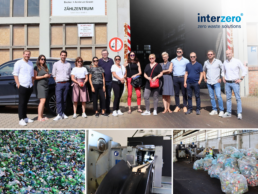
On 24 August, together with employees from the Eurocash Group, we travelled to Germany to look at the bail system in practice. Together, we visited shops with both bagged and automatic collection systems. We also visited the Interzero Conversion Centre, where waste is sorted into the appropriate fractions.
Thanks to the trip, we were able to see with our own eyes how retail chains deal with German legislation. We were able to exchange experiences with our partners and learn more about the procedures taking place in the units visited.
The bail system will soon come into effect in Poland. As Interzero, we strive to learn as much as possible about the needs of the industry. We refine our offering, analyse the successes of others and explore opportunities for development. We believe that together we will be able to meet the legal challenges and create a system as efficient as that of our western neighbours.
Benefit from our experience and create a bail system together with us. We will provide you with solutions to facilitate waste collection and logistics and take over reporting obligations. More information HERE and HERE.
Eco-design or eco-saving? How can packaging design help entrepreneurs? Made4Circle service
Eco-design or eco-saving? How can packaging design help entrepreneurs?
The European Union is moving towards stricter and stricter regulations for packaging put on the market. Its aim is to transform the linear economy into a circular economy, aiming to reducing the amount of waste produced.
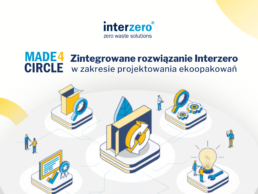
To help companies adapt to upcoming regulatory changes that will favour recyclable packaging, Interzero has introduced an eco-design support programme called Made4Circle.
What is the M4C?
This modular solution for companies of all sizes interested in developing sustainable and recyclable packaging. Drawing on the expertise of packaging recycling experts, we offer support in creating packaging with minimal environmental impact that simultaneously meets legal requirements and meets the needs of the product's consumers. The Made4Circle service consists of 4 main stages that take into account all manufacturers' business needs: preliminary analysis, detailed analysis, solution design and impact assessment.
We encourage you to read the press release about our service HERE
Read more about Made4Circle on our subpage HERE

Publication of the law transposing the SUP Directive
Publication of the law transposing the SUP Directive
A week ago, On 9 May 2023, a law was published implementing the provisions of the SUP (Single Use Plastics) Directive, which means that the legislation will soon enter into force.
The regulations mainly focus on imposing restrictions and requirements on the marketing and use of single-use products made of plastics, and on the separate collection of waste from these products, and introduce obligations:
- The labelling of certain products with symbols used, for example, on cups containing plastics.
- Impose new types of charges, specific to plastic products, such as an end-user charge per unit of packaging, a charge for collection, cleaning and transport, and a charge for public education campaigns.
- For beverage cups and food containers, the provision of alternative reusable packaging or packaging made of materials other than plastic from 1 July 2024.
- The use of recycled plastics in bottles.
- Achieve minimum collection rates for beverage packaging waste in the form of single-use plastic bottles of up to 3 litres,
- Reporting of all activities through the BDO system.
The full text of the law is available HERE

Million-dollar fines for waste? Is it possible?

Million-dollar fines for waste? Is it possible?
Unfortunately, yes. It is a way of tightening sanctions for failing to keep records of waste or having it transported by people operating in the so-called grey market.
7 April in the podcast episode Adventures of Entrepreneurs on waste management in the company was attended by Przemyslaw Kuna, Managing Director at Interzero.
During the interview, the topics covered were:
- What is ROP (Extended Producer Responsibility),
- What is BDO (Waste Database),
- What is the level of awareness among Polish entrepreneurs,
- What are the consequences of not complying with the ROP,
- What official inspections look like and how to protect yourself from penalties,
- What is waste management and what does it do,
And what to expect in the future in terms of waste and environmental protection.
We encourage you to watch the entire interview on the Entrepreneurs' Adventures channel HERE
Action needs to be taken on bail
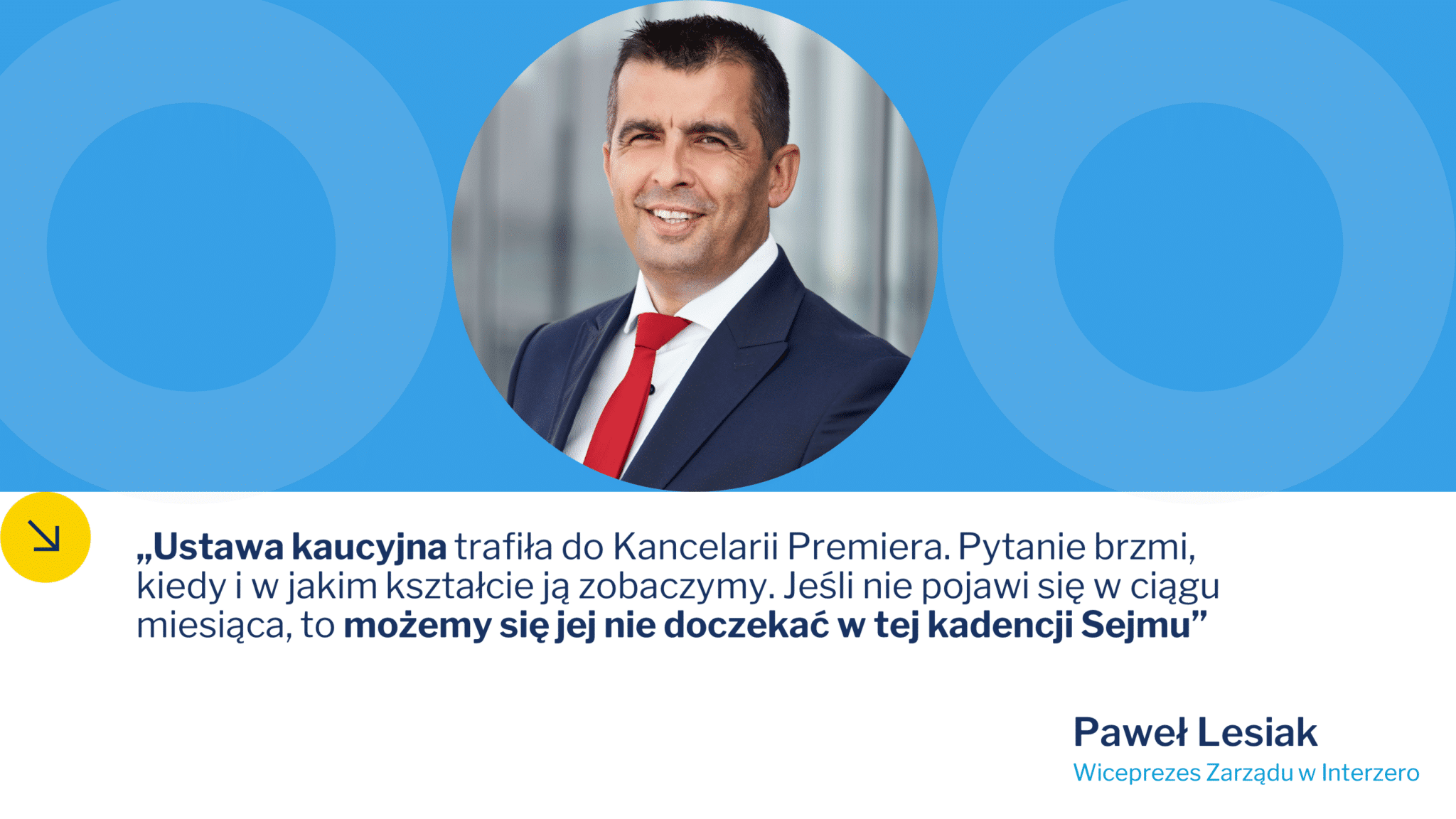
You have to startgo to worksć on deposits
What will be the impact of legislative delays on the deposit system? What about the excessive incineration of packaging and what will the future of chemical recycling look like? These topics were addressed in the latest debate "Packaging in the circular economy: from ideals to practice". for The Republic.
The following took part in the deliberations Renata Juszkiewicz, Anna Larsson, Robert Chciuk, Konrad Nowakowski, Jacek Wodzisławski, Andrzej Gantner, Łukasz Sosnowski and on behalf of Interzero Pawel Lesiak, Vice-President of the Management Board. The debate was chaired by Aleksandra Ptak-Iglewska.
The meeting discussed the future of the European packaging market, the effectiveness of recycling in Poland and the topic of reusable packaging.
When discussing the deposit scheme, participants pointed out that, given the PPWR criteria, the inclusion of dairy packaging is not quite a good idea.
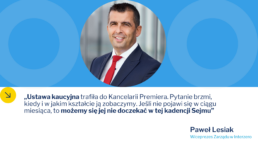
"I agree with the call for dairy packaging not to be included in the system. However, this would be tantamount to not fulfilling the collection obligation under the Regulation. There is no good solution here. The EU regulations make it clear that milk product packaging must be included in the system. A compromise solution would be to postpone the entry into force of the deposit obligation for this range. This would allow the first experience of the system in other material ranges to be gathered and better prepared." - said Pawel Lesiak.
The obligation to introduce the system to smaller shops has also become a subject of dispute. Experts noted that small retail chains want to join the scheme, seeing it as a financial benefit and an opportunity to attract customers.
"As Interzero, we run such a system in small shops in Germany. In our western neighbour, these smaller operators, despite the statutory exemption, are keen to join in. This makes good business sense, because if a customer is not able to return bottles in a particular shop, he or she will simply start shopping elsewhere. In Poland, we should think in a similar way, regardless of the discussion about regulation. I am in talks with retail chains, including small shops, and I hear that they are very interested in the system and want to join it," said Paweł Lesiak.
Link to the whole debate HERE
How can business benefit from waste?
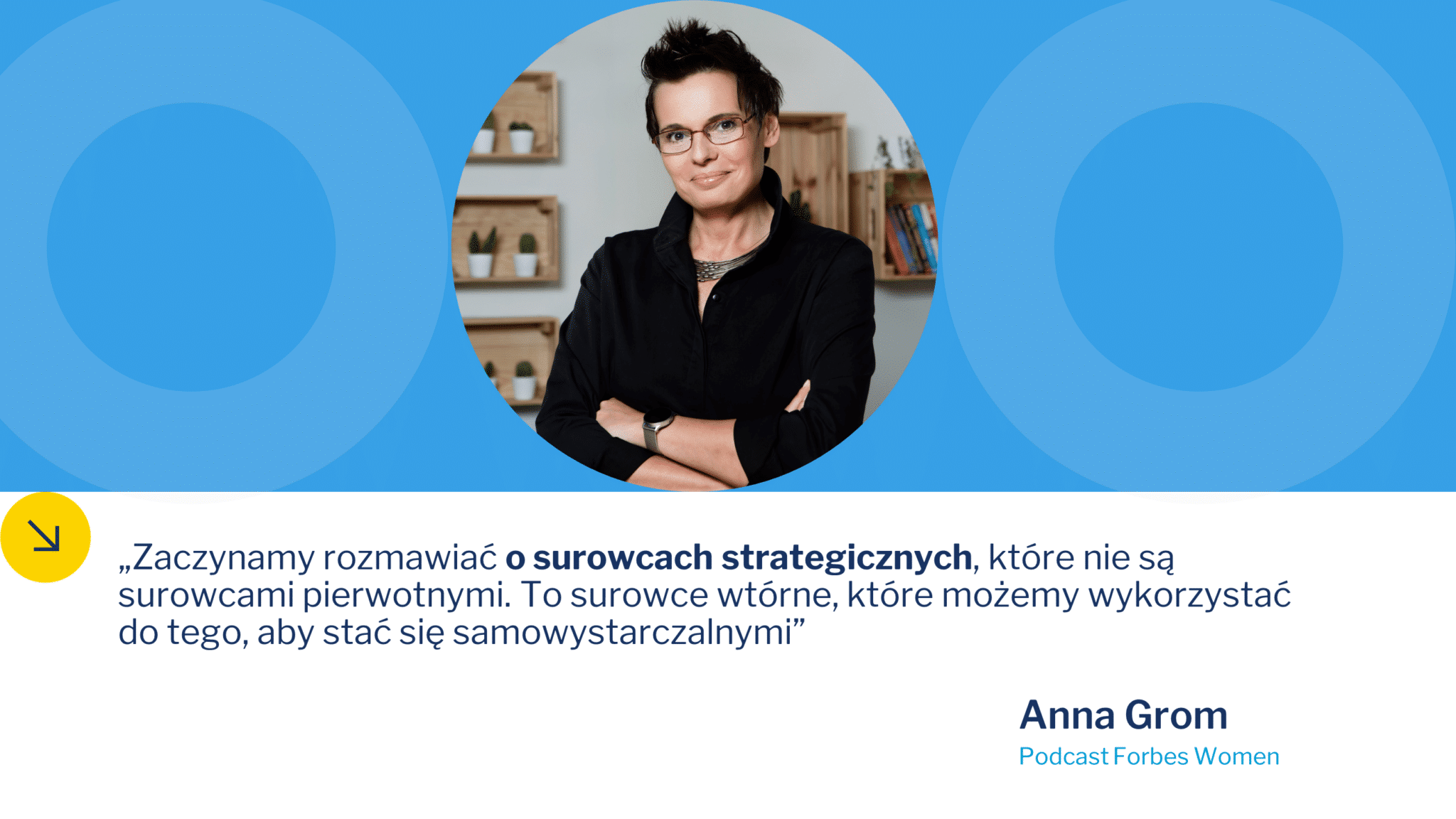
How can business benefit from waste?
Innovative environmental solutions, the unstable legal situation and the implementation of the circular economy concept were discussed by Anna Grom, CEO of Interzero in the latest podcast for Forbes Women Poland.
Environmental protection should not be an abstract value, but a necessary condition for our continued existence. It is worth constantly analysing what is happening in our country and in the world in terms of sustainable development. A trend that can be observed in terms of waste management is the fact that the younger generation is increasingly shifting from paying attention to the brand to recognising the environmental impact of a particular company. The big players are also aware of the cost of raw materials used in production and are moving towards sourcing raw materials in-house.
As an integrator of sustainable environmental solutions, Interzero analyses the needs of its customers and, together with them, seeks solutions that can deliver tangible financial and environmental results. We are already taking steps to close the raw material cycle - advising companies on how to optimise processes through sustainable packaging design, for example, and implementing circular economy concepts into existing and new business models.
We encourage you to listen to the entire podcast HERE

Time to make waste management more efficient
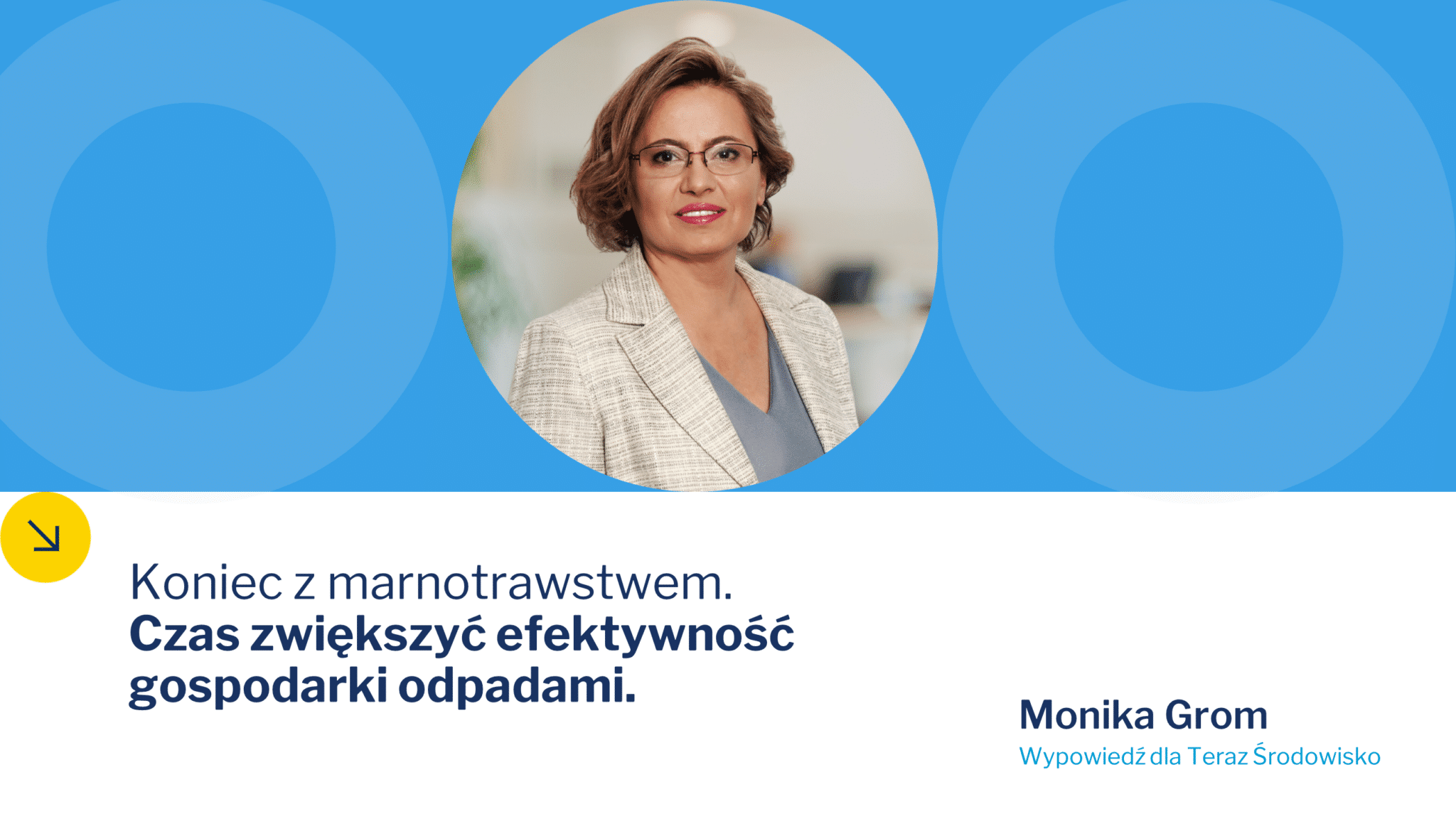
It is time to make waste management more efficient.
Waste and its proper management is currently one of the biggest challenges facing society. From the entrepreneur's point of view, the greatest need is the stability of the regulatory environment.
In a recent interview with the Now Environment portal, Monika Grom, Vice President of the Interzero Group in Poland, points out that business first and foremost needs to reduce the risks arising from the economic situation. The next step is to increase efficiency and invest in new technologies.
"We work with both waste generating companies and recycling facilities. We know the needs and capabilities of both parties. As a result, we often act as an integrator to help close the raw material cycle, which brings tangible environmental, financial and image benefits. In addition to this, we carry out holistic and spot analyses from various environmental scopes. We examine both the compliance of the entrepreneurs' activities in terms of current legislation and advise them on what they can do differently to free up financial resources."- Monika Grom comments.
"Today, thanks to inter-team cooperation, we are achieving synergies, which we will strengthen, among other things, by investing in digitalisation. We have our achievements in this field too. In addition to the aforementioned Interzero Waste Platform, we have developed the Interzero Academy e-learning platform, the remote contracting system or the virtual customer service office, My Interzero. It is high time for waste management to take full advantage of the potential offered by digitalisation and thereby increase its efficiency." - added Monika Grom
The entire interview can be read at the link HERE